





- This exhibition, as a phase of research and experimentation, focuses on the possibility of natural elements as a medium for sound, exploring the conditions and mechanisms of sound generation through the interaction between different substances.
- 本展覽作為一項階段性的研究與實驗,聚焦於自然元素作為聲音媒介的可能性,透過不同物質之間的交互作用,探討聲音生成的條件與機制。
Related works
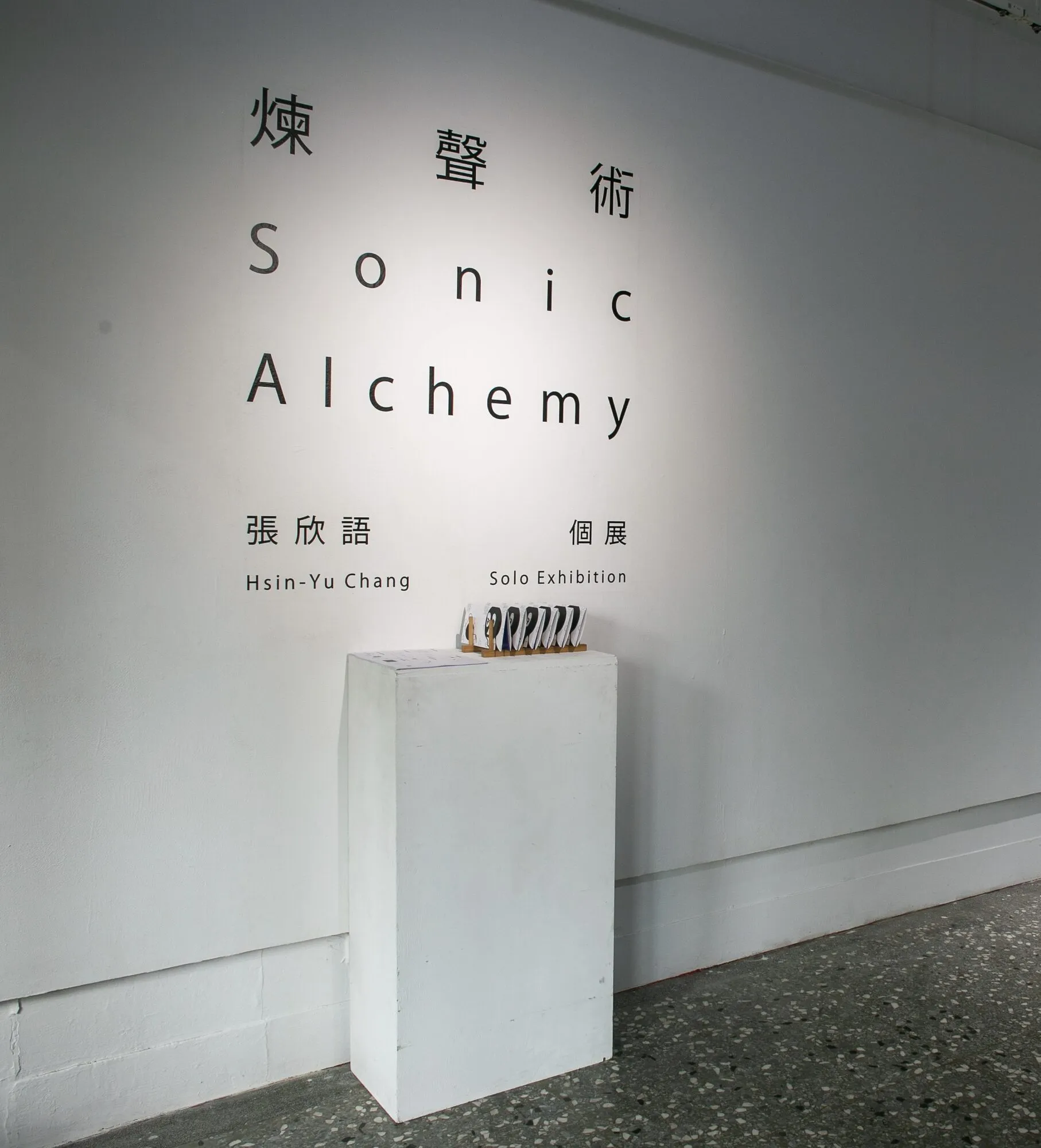
Sonic Alchemy In my previous works, my ongoing inquiry has not been into sound as a medium for conveying information, but rather into how sound emerges from the intrinsic properties of materials and from their interactions with different forms of energy and environments. I seek the various possibilities through which materials and phenomena generate sound, and through this process, I attempt to rethink the relationship between material and sound.
This pursuit often reminds me of a childhood memory: walking along the street with a tree branch in my hand, striking a series of iron railings. At that moment, the railings ceased to function as structures for support or protection; they became a continuous row of hollow metal columns. There was no need to consider whether the action carried any particular meaning, nor to assign symbolic significance to the sounds. I simply listened to the responses produced by collisions between different materials: the wood produced a muted pa, the metal answered with a resonant clang, and together they created another sound altogether. As I continued striking the railings, rhythm and timbre constantly shifted according to differences in their structure. The immediate feedback of vibration, together with the unpredictability arising from each material's form, texture, composition, and physical properties, made me feel as though I was gradually approaching the materials themselves.
My solo exhibition Sonic Alchemy is centered on the imagination of "refining sound." Here, alchemy refers to a process of combining different elements and introducing energy. This energy may take the form of electricity, heat, vibration, interference, or translation. To "refine sound" is to create conditions under which materials and phenomena act according to their own physical properties, allowing sound to emerge through these interactions and transformations. Sound is therefore not a predetermined outcome, but rather a phenomenon arising when different materials encounter and respond to one another.
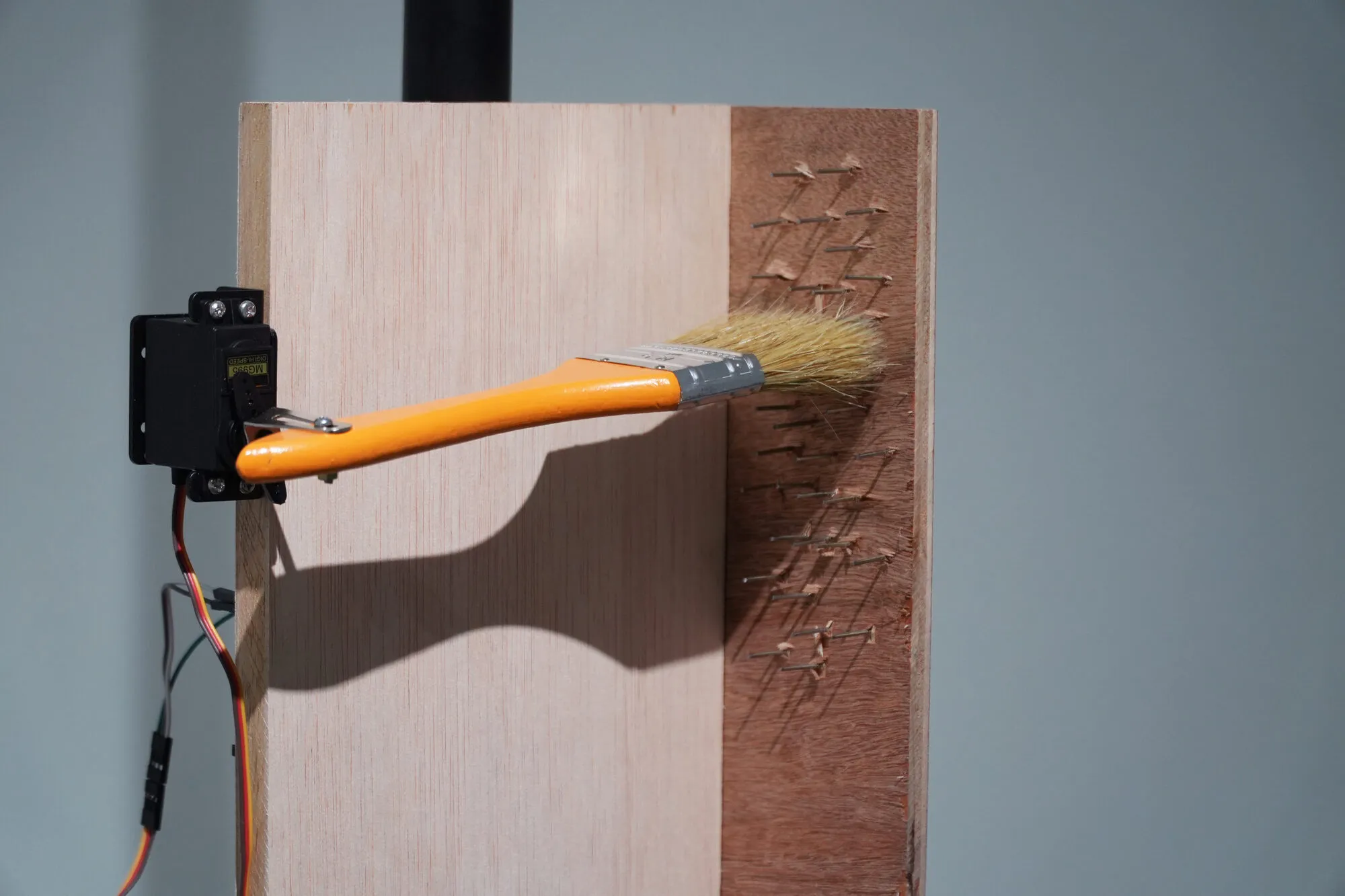
Direct Contact Between Materials Rainforest (2026) Soft brush bristles rub against rows of slender metal nails embedded in wood, producing sounds reminiscent of falling raindrops. A gentle touch transforms hard, dangerous nails into delicate raindrops.
The function of an object often conceals its own materiality. Noise, misuse, or malfunction, on the other hand, can become opportunities to rediscover it. When an object departs from its intended use or partially loses its prescribed function, the physical properties previously hidden beneath its utility begin to emerge. When the sounds produced by these objects exceed our expectations and prior experiences, perception momentarily ruptures, creating a space in which curiosity and imagination arise.
In Rainforest , brushes no longer serve to paint, nails no longer fasten objects together, and the wooden board is no longer merely a supporting structure. Once their original functions are suspended, the three materials interact anew through their own forms, structures, and material properties. The softness of the bristles, the elasticity of the metal nails, and the resonance of the wood collectively participate in the formation of sound. What we hear is not simply incidental noise, but the physical response generated through the materials' direct contact and friction with one another.
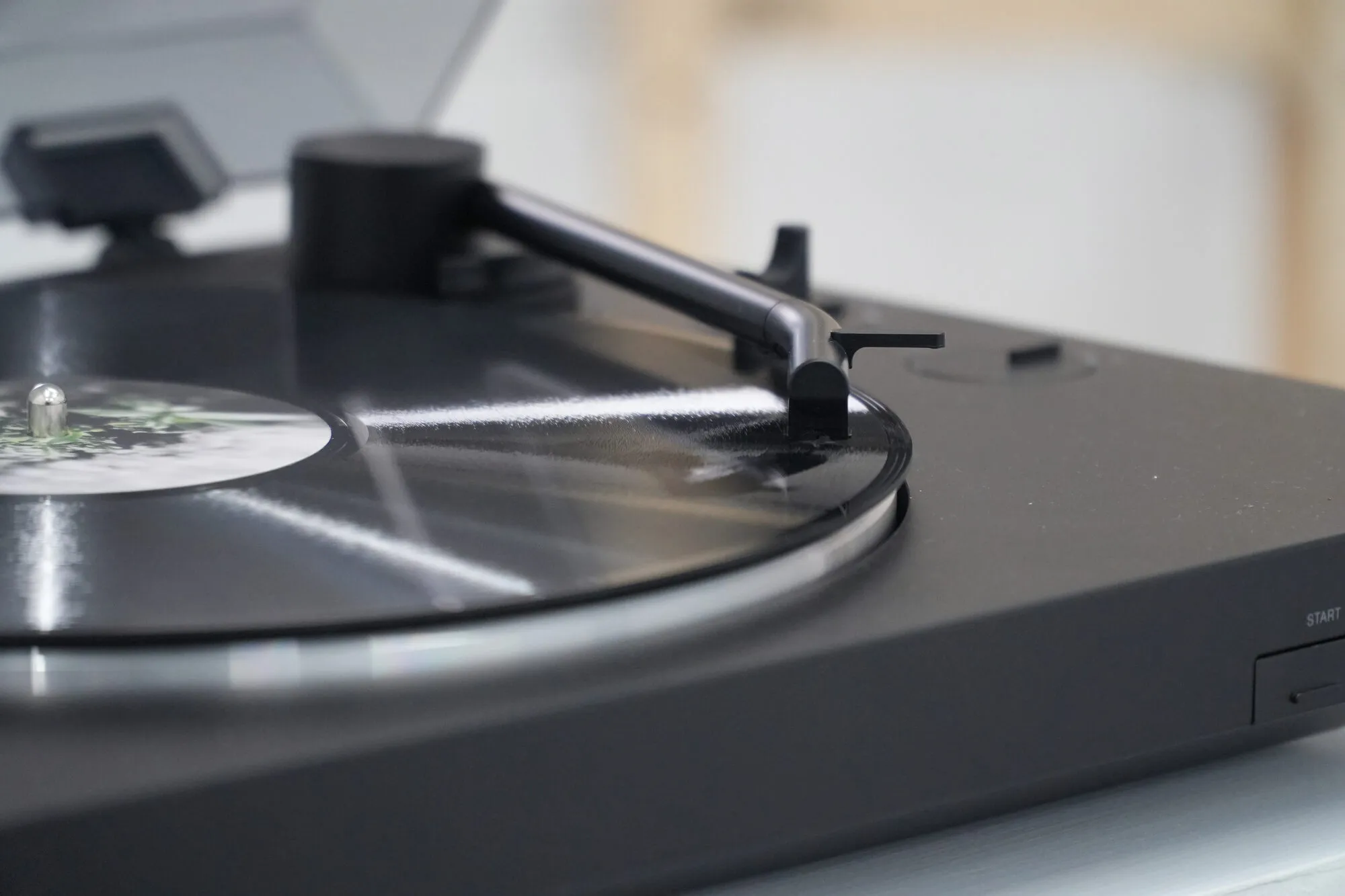
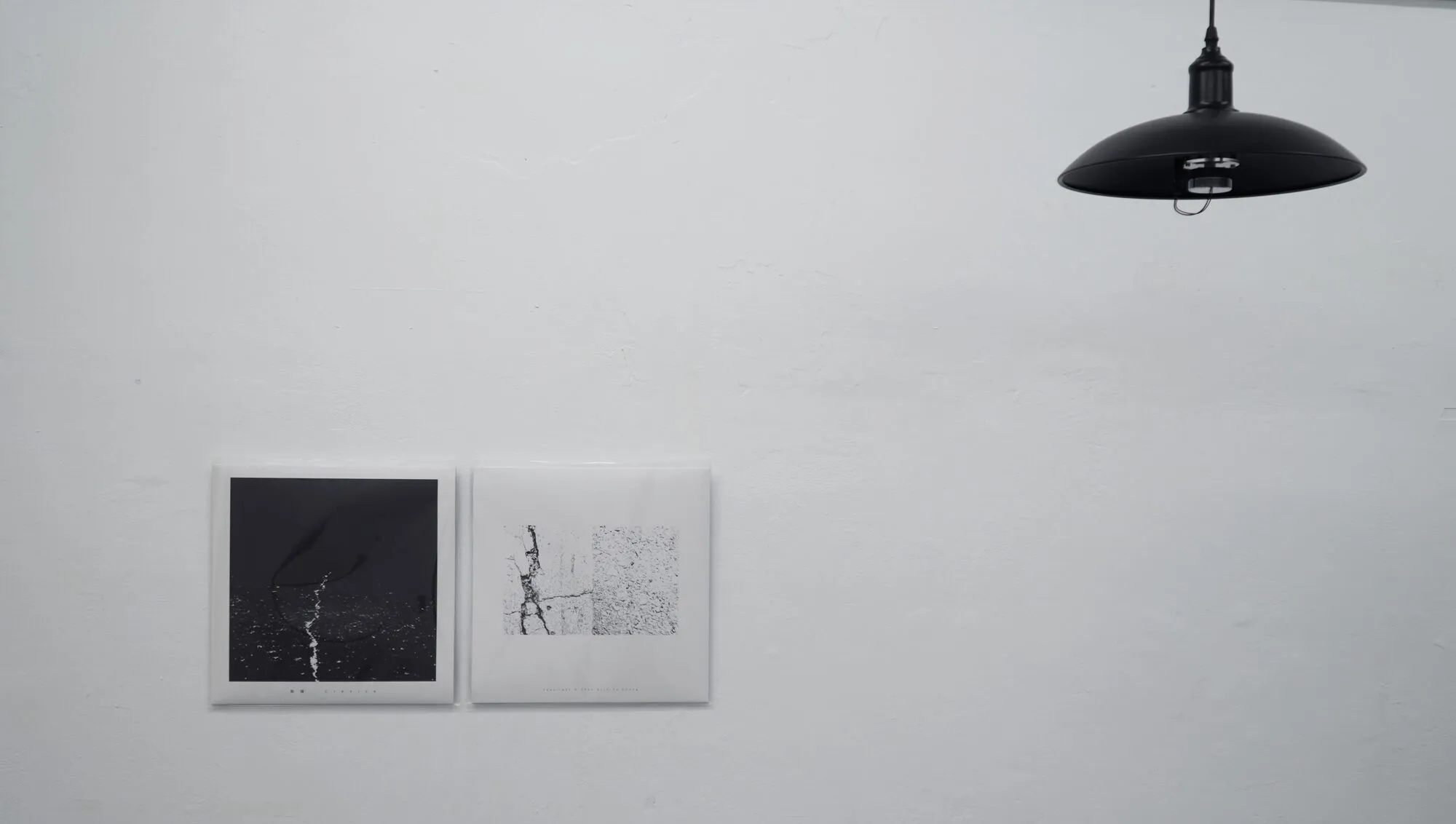
Correspondences Between Phenomena and Media Aftershocks in the Crevice (2026) I slowly push a skateboard across cracks in the pavement, recording the resulting friction and vibrations with contact microphones. The recordings are then pressed onto vinyl records. The cracks in the ground become grooves on the record's surface, which, during playback, once again become vibrations transmitted into metal lamp shades, glass windows, and loose aluminum frames throughout the exhibition space.
The crack is engraved into vinyl as a fault line; vibrations throughout the space make the body feel like a stylus moving across a record.
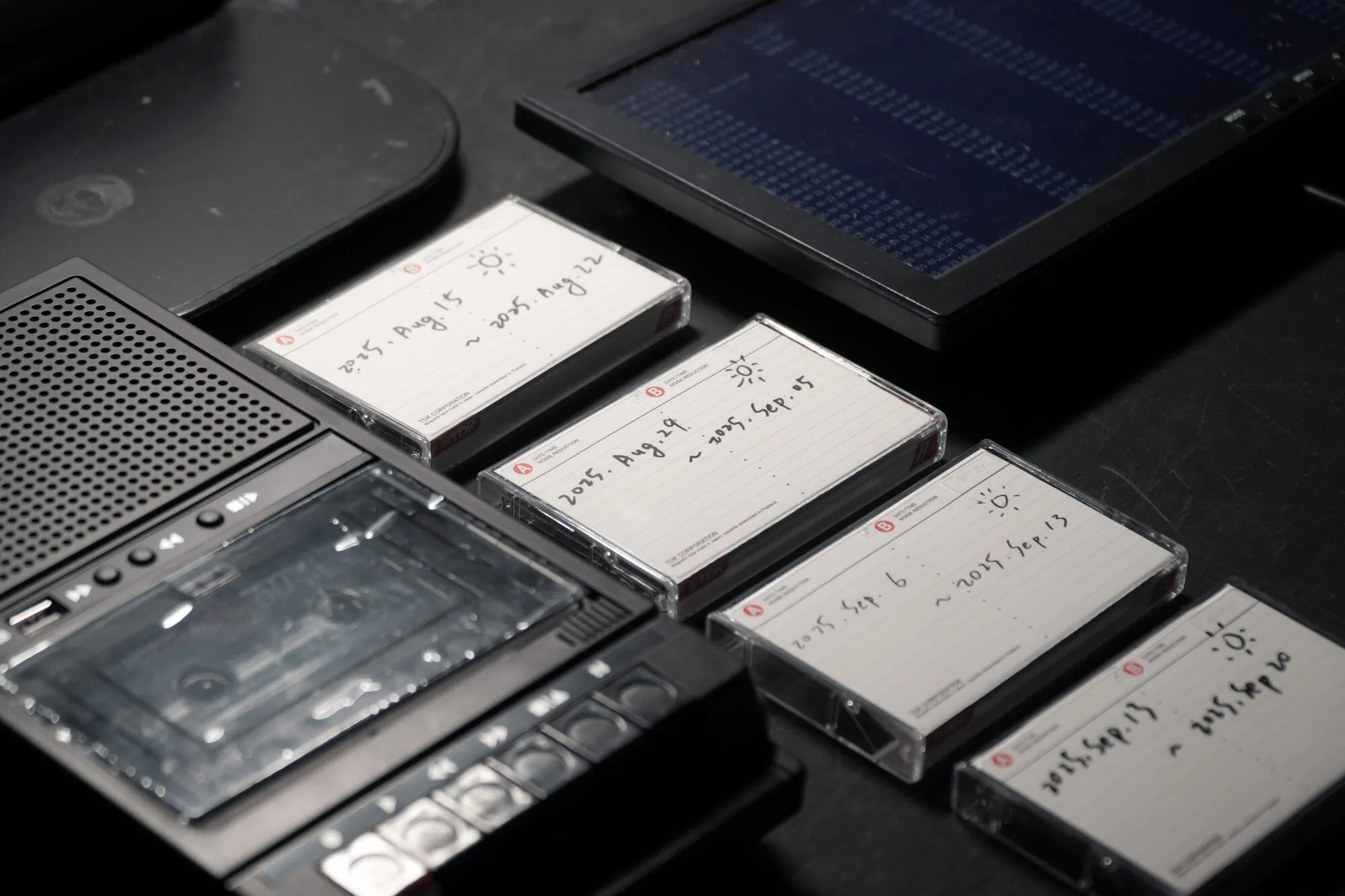
Sun Diary (2026) Variations in the magnetic field of the solar wind are translated through software into frequencies within the range of human hearing and recorded onto cassette tape. The magnetic fluctuations of the Sun are transformed into magnetic patterns on the tape and, during playback, become vibrations distributed throughout the exhibition space via a low-frequency sound system.
Cassette tape records the changing magnetic fields of the solar wind; coronal storms beyond human sight are transformed into auroras blooming within noise.
Both works involve processes of translation, storage, and playback. In the former, vibrations produced by cracks in the ground become physical grooves on the surface of a vinyl record. In the latter, fluctuations in the Sun's magnetic field become magnetic arrangements within cassette tape. The recorded content directly reflects the physical mechanisms of the recording media themselves, making their technical and material structures integral to the works.
Rather than asking what kind of sound is produced through translation, I am more interested in which medium performs the translation, how the media participating in the process relate to one another, and whether the phenomenon and its recording medium share a form of physical or conceptual continuity. Here, the significance of the medium lies not merely in shaping our understanding of information, but in its ability to extend the physical characteristics of the phenomenon itself. Vinyl is not an arbitrary choice for recording cracks, nor is cassette tape an arbitrary choice for recording the solar wind. They share corresponding physical mechanisms—grooves and vibration in one case, magnetism and magnetic inscription in the other. The recording principles of the media resonate with the phenomena they record, allowing recording to extend beyond the preservation of information into the continuation of physical relationships.
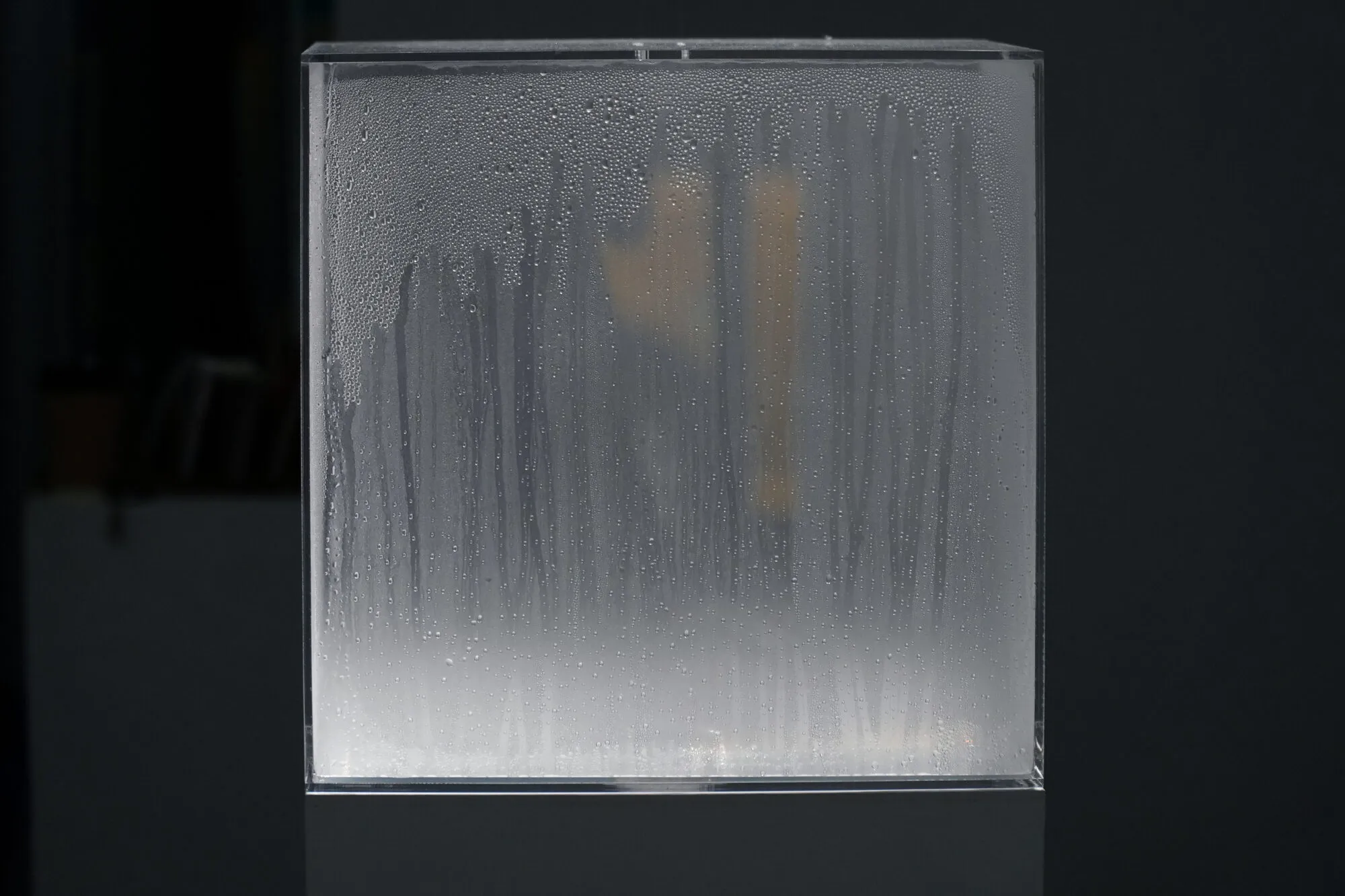
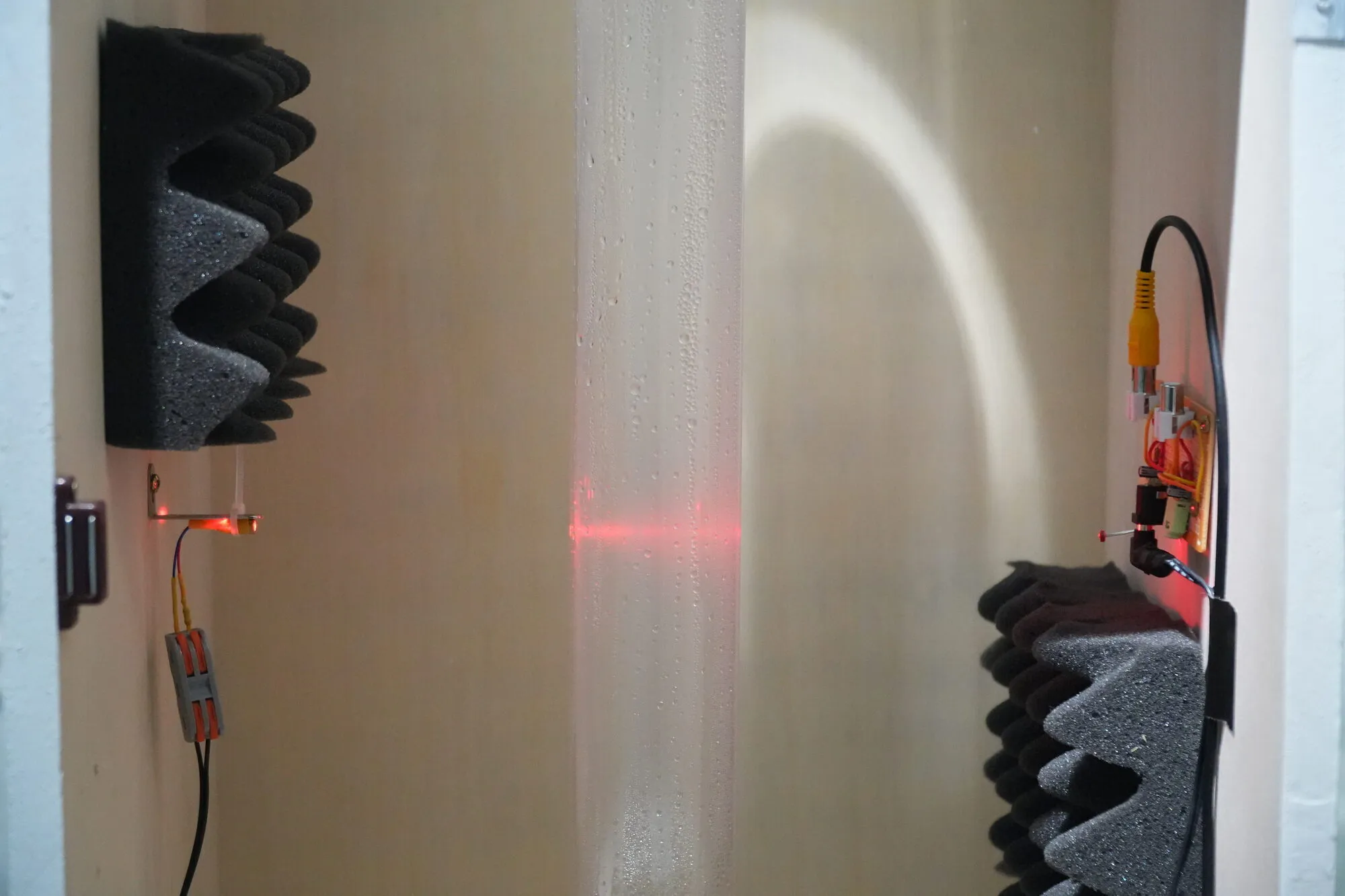
The Interaction Between Energy and Medium Myst (Box Version) (2026) Mist encounters a laser beam concealed within a pedestal. Tiny droplets suspended in the air continuously disrupt the laser's path, causing the photosensor to receive unstable fluctuations in light intensity. These signals are amplified into low-frequency sound and transmitted through vibration speakers into the surrounding wooden walls, transforming the mist's subtle interference with light into sound emitted by the architecture itself.
Tiny droplets carried by the wind scatter the laser beam, generating chaotic signals. The mist inside the box resembles a formless creature, while the unstable signals become the whispers of a monster.
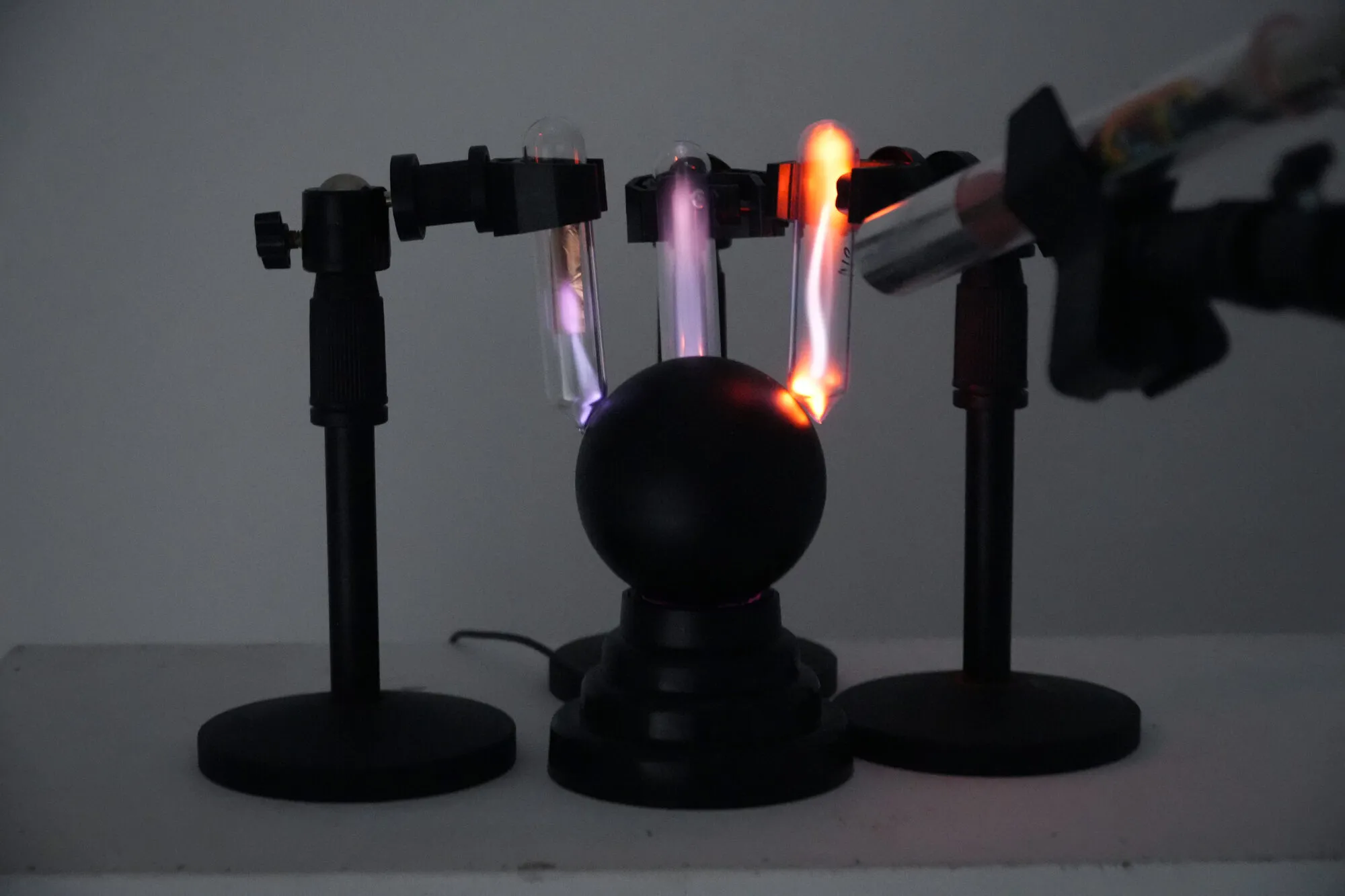
Inert Gas Resonance (2026) Different noble gases emit light when excited by high-voltage electricity, accompanied by fluctuations in electromagnetic activity. These ordinarily imperceptible electromagnetic events—often experienced merely as background noise—are captured by an induction microphone and amplified into sound, allowing otherwise inaudible physical activity to enter the range of human perception.
High voltage awakens noble gases into a faint glow—a chorus brought to life by electric current.
Unlike materials with stable and fixed forms, mist and noble gases exist in a constant state of flux. In these two works, laser light and high voltage are not simply technical tools for producing sound; they function as forms of energy within the process of "sonic alchemy," establishing the conditions through which the activity of matter can be observed. Here, the medium functions much like a developing agent, allowing interactions between energy and matter to leave perceptible traces. As laser light passes through mist, or high voltage excites noble gases, energetic processes that ordinarily remain unnoticed begin to manifest. What these works invite us to listen to is therefore not energy itself, but the ways in which different media respond to it.
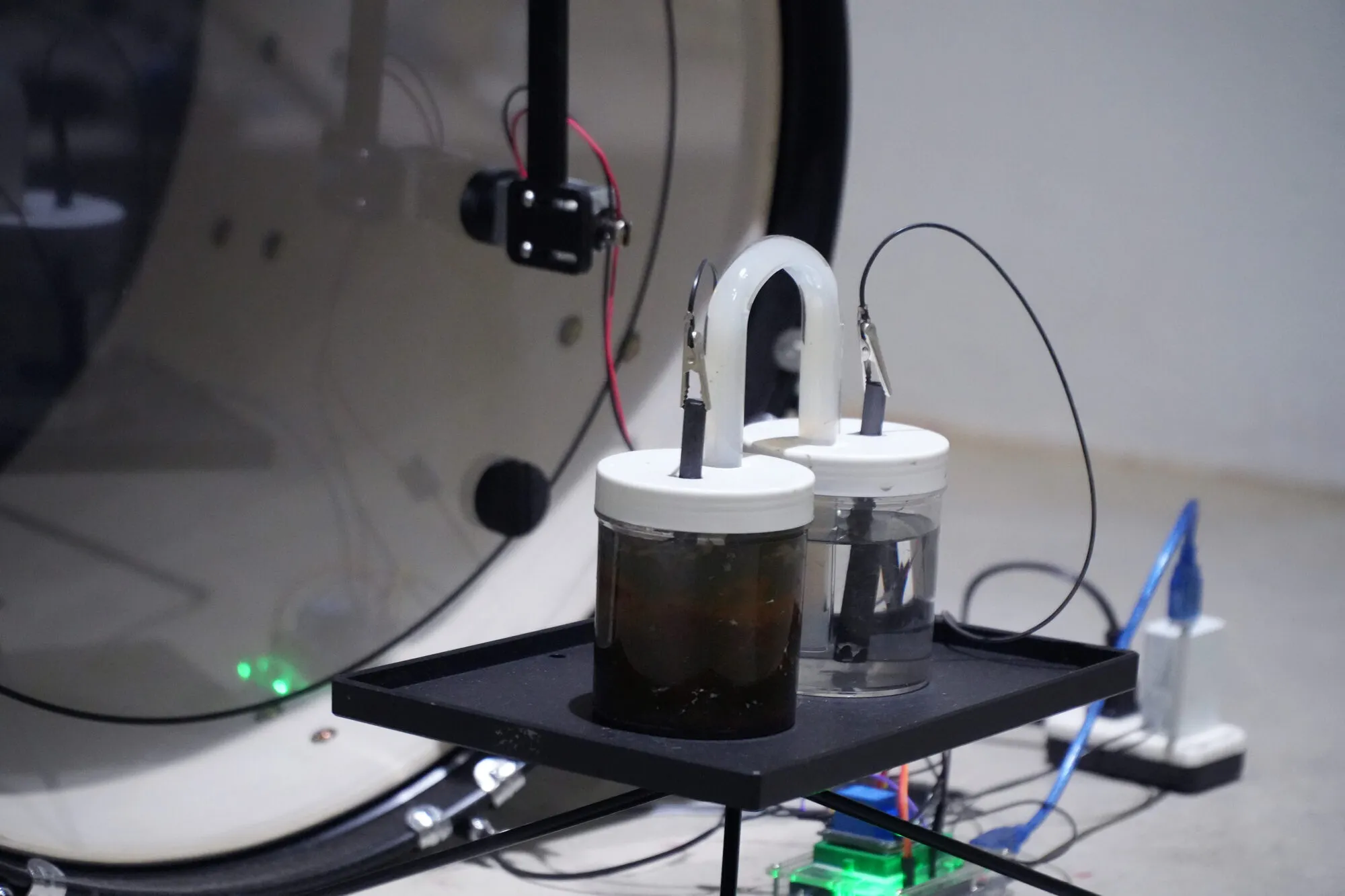
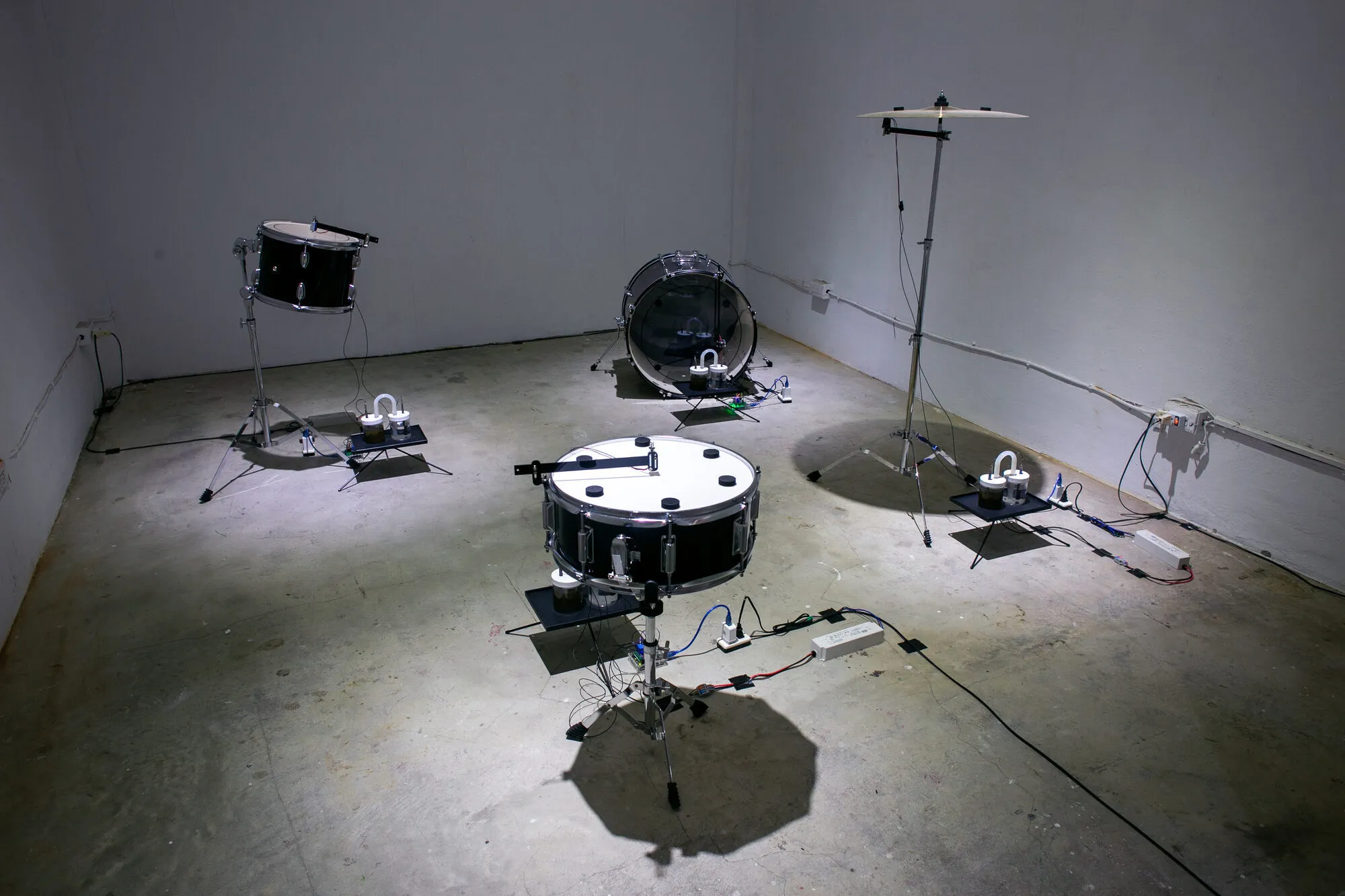
The Translation of Living Activity Microbial Ensemble (2026) A microbial fuel cell harvests the electrical current generated by microorganisms as they metabolize organic matter in wetland soil. Distinct current peaks are translated into trigger signals that activate an acoustic drum set, transforming otherwise invisible microbial activity into physical impacts.
Wetland sediment accumulates layers of materials and traces of life, forming deposits of the city's memory. The rhythm emerges from energy that has never fully dissipated within the geological history of the marsh.
Musical instruments are designed with the implicit presence of a performer. Once the human performer is removed from this relationship, the position traditionally occupied by the musician becomes vacant—a vacancy that allows soil and microorganisms to take their place. Percussion instruments, in particular, produce sound through direct physical impact. Their sounds are more readily understood as a succession of events than as melodies awaiting performance.
Unlike the other works in this exhibition, which pursue a form of physical continuity between material and sound, Microbial Ensemble approaches "sonic alchemy" through signal translation. Rather than directly rendering the fluctuations generated by soil and microbial activity as sound, it creates a pathway through which living activity enters an existing sound-producing system.
I have always remained cautious toward sonification as an artistic strategy. If a translation scheme exists merely to facilitate understanding or produce an aesthetic effect, both the phenomenon and the material risk being reduced to interchangeable sources for arbitrary mapping. The real question, therefore, is not whether translation is employed, but what kind of translation can preserve the roles and relationships a work seeks to establish, thereby acquiring its own necessity.
In Microbial Ensemble , the choice of the sounding object frames microbial activity as a sequence of events. Meanwhile, the system's threshold functions less as an arbitrary numerical parameter than as a condition comparable to thresholds found in the physical world. Just as water gradually accumulates until it overflows, or a branch bends until it finally breaks, events occur not continuously but when accumulated change crosses a critical condition. Likewise, Microbial Ensemble does not respond to every minute fluctuation in electrical current. Instead, the system transforms microbial activity into a drum strike only when it exceeds the threshold established within the work.
Space The exhibition was also organized spatially according to differences in scale and material. The six works occupy different floors of the building, extending vertically from the basement (B1) to the fifth floor, creating an ascending path through the exhibition. Visitors begin underground with the microbial activity of Microbial Ensemble , then gradually encounter mist and light in Myst (Box Version) , cracks in the pavement in Aftershocks in the Crevice , brushes, wood, and metal in Rainforest , gaseous matter and electromagnetic activity in Inert Gas Resonance , before finally arriving at the magnetic fluctuations of the Sun in Sun Diary .
This trajectory, stretching from soil to the Sun, connects diverse materials and physical phenomena through the building's vertical axis. It is simultaneously a movement across scales—from invisible microbial activity beneath the ground, to familiar materials encountered by the human body, and onward to gases, electromagnetic fields, and solar activity occurring beyond planetary scales. Moving through the building, visitors traverse a world that expands from the subterranean to the cosmic, from the microscopic to the macroscopic, passing through different materials, forms of energy, and scales that constitute our physical reality.
Through the practice of Sonic Alchemy we may become more attentive to relationships that often remain unnoticed: between materials, between matter and energy, and between matter and its environment. By listening to the ways materials respond to one another, we may begin from direct sensory experience and gradually extend our imagination beyond the limits of familiar perception and understanding. In this process, sound becomes not only something to be heard, but also a means through which poetic possibilities crystallize.
Sonic Alchemy 在過往的創作中,我持續探究的並非聲音作為傳遞訊息的媒介,而是聲音如何從物質自身的特性,以及物質與不同能量、環境的互動過程中產生。我試圖尋找各種物質與現象生成聲音的可能性,並在這個過程中重新理解物與聲音之間的關係。這個過程讓我想起小時候拿著樹枝沿路敲打鐵欄杆的經驗。那時欄杆不再是供人扶握或作為安全防護的設施,而是一排連續的空心金屬柱。敲打時不需要思考這個行為是否承載著某種意義,也不必賦予聲音任何象徵,只是單純地感受不同物質碰撞所產生的回應。木頭敲擊時發出「啪」的一聲,金屬回應「鏘」,兩者交會後形成另一種聲響,沿著一整排欄杆持續敲擊,節奏與音色又隨著結構的差異不斷改變。這種來自震動最直接的回饋,以及物質本身因形體、紋理、材質與物理特性所帶來的不可預測性,讓我感覺自己正逐漸接近這些物質本身。
個展《煉聲術》以「煉成聲音」作為展覽的核心想像。這裡的「煉」指的是一種組合不同元素並給予能量的過程,這個能量的形式可以是通電、加熱、震動、干擾或轉譯。所謂「煉聲」,便是在這些條件下,使不同物質與現象依循自身的物理特性產生對話,並使聲音從這些過程中產生。
物質的直接接觸 Rainforest (2026) 大量柔軟的刷毛摩擦排列於木頭上的細長金屬釘,產生近似雨滴落下的聲響。
柔軟的觸摸將堅硬危險的鐵釘變成輕輕的雨滴
一件物品的功能往往遮蔽了它自身的物性,而雜訊、誤用或故障,反而提供了重新認識它的契機。當一個物件偏離原本的使用方式,或部分失去既定功能時,那些平時隱藏於功能背後的物理特性便開始顯現,當這些物件產生的聲響超出我們既有的經驗與預期時,感知便會產生短暫的斷裂,而趣味與想像也往往從這道裂縫中浮現。在 Rainforest 中,刷子不再服務於塗抹,釘子不再用於固定物件,木板也不再只是支撐的結構。當原本的功能被暫時移除,三者重新以各自的材質、形體與結構產生互動,刷毛的柔軟、金屬釘的彈性與木板的共振共同參與聲音的形成,它們所產生的聲音是材料在彼此接觸、摩擦的過程中所形成的物理回應。
現象與媒介的對應 Aftershocks in the Crevice (2026) 中,我緩慢地將滑板壓過路面的裂縫,並以接觸式麥克風記錄摩擦與震動所產生的聲音,再將錄音製成黑膠唱片。地面的裂縫經由聲音轉化為唱片表面的溝槽,並在播放時再次成為震動,傳導至展場中的金屬燈殼、玻璃窗戶與鬆動的鋁框結構。
裂縫被刻成黑膠上的斷層線,空間中的震動讓身體像是移動在唱片上的針頭
Sun Diary (2026) 將太陽風的磁場數據變化透過程式轉換至人耳可聽的頻率範圍,再錄製於卡帶,使來自太陽的磁場變化轉化為磁帶上的磁粉分佈,並在播放時透過低頻聲音系統重新成為空間中的震動。
磁帶紀錄太陽風磁場的變化,肉眼無法見證的日冕風暴轉化為在噪音中綻放的極光
這兩件作品都涉及了轉換、儲存與播放。前者讓地面裂縫所造成的震動成為黑膠唱片表面的物理溝槽,後者則將太陽風的磁場變化成為卡帶磁粉中的磁性排列。作品所記錄的內容恰好回指了媒介自身的物理機制,它們的技術與物質結構也成為建構作品的重要因素。比起轉換出什麼聲音,我更在意這些聲音是被什麼媒介所轉換,參與轉換過程的媒介之間有什麼關聯,以及那些現象與媒介之間是否存在某種物理或概念上的連續性。媒介在這裡的重要性不只是它如何影響訊息的理解,更在於它是否能延續現象原有的物理特性。黑膠之於裂縫、卡帶之於太陽風都不是任意的選擇,它們共享了溝槽與震動、磁場與磁性的物理機制,媒介的記錄原理與所記錄的素材形成呼應,記錄便從資訊的保存,延伸至物理關係的延展。
能量與介質的作用 Myst(box version) (2026) 中,水霧與隱藏於台座內的雷射光相遇,漂浮的微小水滴持續干擾雷射的傳播,使光敏元件接收到不穩定的光強變化。這些訊號經過放大後轉化為低頻聲音,並透過震動喇叭傳導至空間中的木作牆面,使水霧對光的細微干擾變成整個空間牆面發出的聲響。
被風吹起、飄散在空中的小水滴干擾著雷射光,形成紊亂的訊號,箱子裡的水霧像是沒有形體的生物,雜亂的訊號成為怪物的低語
Inert Gas Resonance (2026) 中,不同的惰性氣體在高壓電激發下發光,同時伴隨著電磁訊號變化。這些平時隱藏於空間中、近似雜訊的電磁活動被感應式麥克風接收並放大為聲音,使原本無法直接被聽見的物理活動進入人的感知範圍。
高壓電激發惰性氣體散發微光,被電流喚醒的合唱
相較於具有固定形體的材料,水霧與惰性氣體始終處於流動與變化之中。在這兩件作品中,雷射光與高壓電並非單純用來產生聲音的技術工具,它們作為「煉聲」的能量形式,建立了一種得以觀測物質活動的方法。介質像是一種顯影的條件,使能量與物質之間的互動得以留下痕跡。雷射穿越水霧、高壓電激發惰性氣體時,不易察覺的能量活動開始顯現,作品所聆聽的便不只是能量本身,也包含介質的狀態。
生命活動的轉譯 Microbial Ensemble (2026) 利用微生物燃料電池收集土壤中微生物代謝有機物過程中所產生的電流,將其中較明顯的電流峰值轉化為觸發訊號,驅動展場內實體鼓組的敲擊,使肉眼不可見的微生物代謝活動透過電流變成物理撞擊。
濕地的泥沙混合了各種物質與生命的殘層,形成城市記憶的沉積,聲音的節奏來自沼澤地質歷史中未曾消散的能量
樂器的設計預設了一位演奏者的存在,當人從這段演奏關係中被抽離,原本由演奏者占據的位置便出現了主體的空缺,這個空缺正好成為土壤及微生物現身的地方。而打擊樂器的發聲方式是建立於物理撞擊,它更容易被理解為一連串的事件,而不是一段等待被演奏的旋律。不同於前面提及的作品所追求的物理連續性,這裡的煉聲是以訊號轉譯為方法進行,這件作品沒有直接取用土壤及微生物產生的波動作為聲響,它創造的是使生命活動進入系統的途徑。
我一直對轉譯(sonification)類型的作品保持相對謹慎的態度,因為如果一套轉譯規則只是為了方便理解或製造效果,現象及物本身就很容易退化為可以任意替換的映射素材。但真正的問題未必是轉譯這個方法,而是什麼樣的轉譯才能延續作品試圖建立的角色與關係,並因此具有其必要性。這件作品透過發聲物件的選擇將生命活動視做一種事件,而轉譯規則中的 threshold 則更接近真實世界中的臨界點,如同水逐漸累積直到溢出容器、樹枝彎曲到某個程度後折斷,事件是在累積的過程中跨越某個條件後才發生。 Microbial Ensemble 也是如此,作品並不回應每一次細微的電流變化,只在活動跨越系統設定的臨界條件時才將其轉化為一次鼓的撞擊。
空間 展覽現場也針對尺度及材料做了空間安排。六件作品分布於建築從地下 B1 至 5F 的不同樓層,形成一條由地下逐漸向上延伸的垂直路徑。觀眾從地下土壤中微生物的代謝活動 Microbial Ensemble 出發,隨著樓層上升,依序經過水霧與光 Myst(box version) 、地表裂縫 Aftershocks in the Crevice 、刷毛、木材與金屬 Rainforest、氣體與電磁活動 Inert Gas Resonance,最終抵達來自太陽的磁場變化 Sun Diary 。這條由土壤延伸至太陽的路徑,使不同物質與物理現象沿著建築的垂直空間彼此串連。它同時也是尺度的移動,從土壤中肉眼不可見的微生物活動,到身體可以直接接觸的日常物質,再到氣體、電磁場與來自行星之外的太陽活動。從地底到宇宙、從微觀到巨觀,觀眾在建築中的移動,像是逐步穿越構成世界的不同物質與能量。
透過「煉聲」我們似乎更有機會發現物與物、物與能量,以及物與環境之間不易被察覺的關係。透過聆聽物質如何彼此對話,我們或許也能從最直接的感官經驗出發,逐漸將想像延伸至既有經驗與認知之外,聲音也可能凝聚出詩意的結晶。