





- Secrets may be hidden in darkness, but they may also exist within the light that illuminates things. The same light may reveal itself differently and be interpreted in different ways by different beings.
- 秘密可能隱藏於黑暗,也可能存在於照亮事物的光之中。同一道光在不同存在之間也許也有不同的顯現與解讀。
Related works
Introduction I once came across an online introduction to laser eavesdropping technology, and it occurred to me that this technique might open up a new direction in my exploration of sound. The basic principle involves directing a laser beam at a window and placing a photosensitive sensor along the path of the reflected light to detect its fluctuations. When someone speaks on the other side of the window, sound travels through the air and causes the glass to vibrate. These vibrations alter the path, phase, or intensity of the reflected light. The sensor detects these changes, and after the signal is amplified, the speech can be heard. When visible light is used as a carrier for transmitting signals, unlike radio signals that are difficult to perceive with the naked eye, it forms a tangible path through physical space. To me, this feels like a way of making signals "visible." Before reaching the receiver, light can be blocked, refracted, or interfered with, and these properties also offer possibilities for introducing physical materials into the process.
Listen to the Light series (2022–2025) Unlike natural light, such as sunlight, electrically powered artificial light sources rely on driver circuits and various electronic components. As a result, the light they emit often carries fluctuations at different frequencies. This can be clearly understood through the mechanisms used to control brightness. For example, one common method of dimming LEDs is pulse-width modulation (PWM), which rapidly switches the electrical current on and off, adjusting the proportion of time the current remains on during each cycle to control brightness. What we perceive as continuous light may actually be the result of flickering at a speed too fast for the human eye to distinguish. Another familiar experience of this phenomenon occurs when we photograph projected images or lighting. Because of differences between a camera's shutter speed and the frequency at which an image or light source changes, we sometimes see scanning lines or flickering lights on the camera's display.
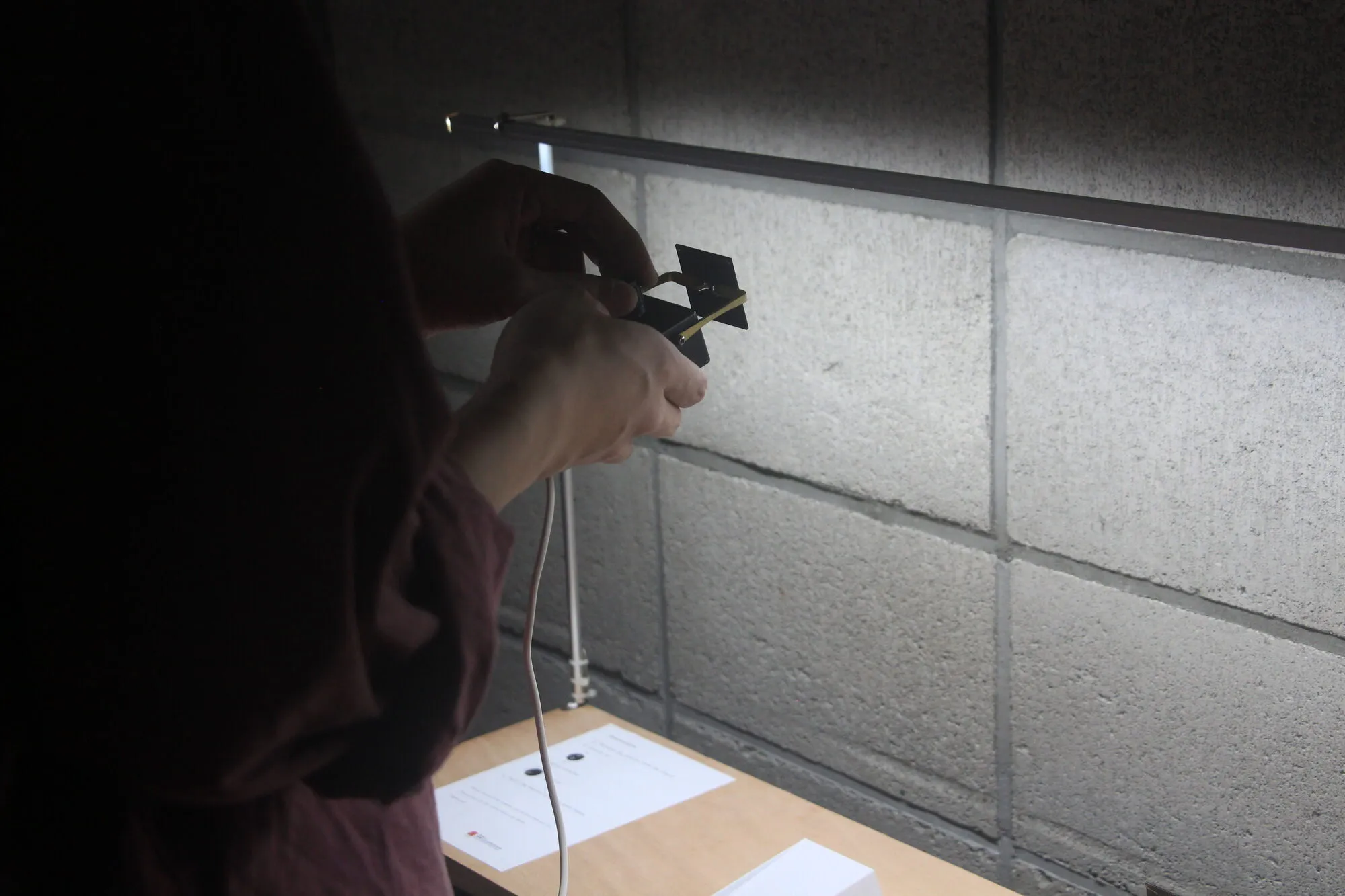
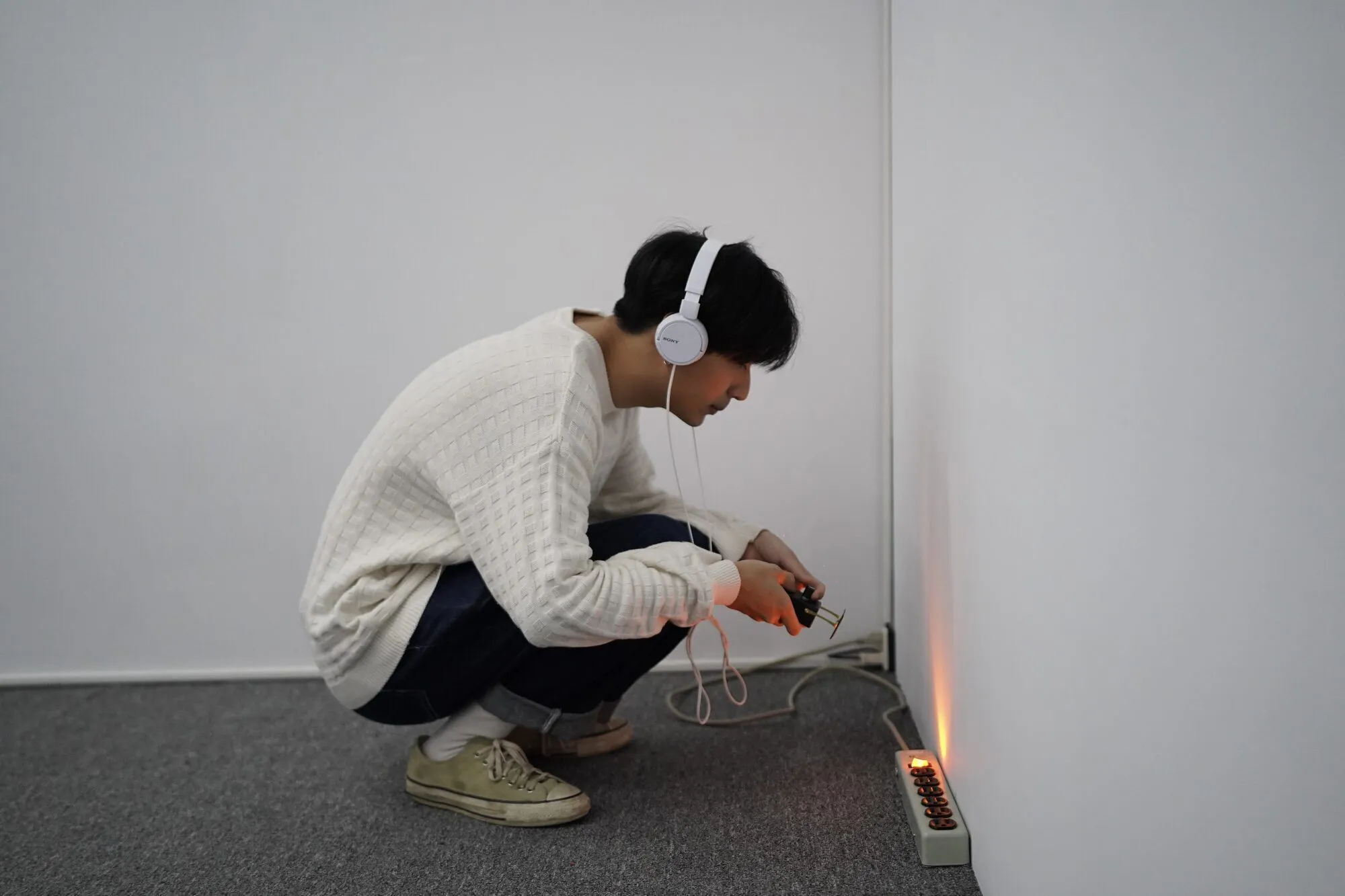
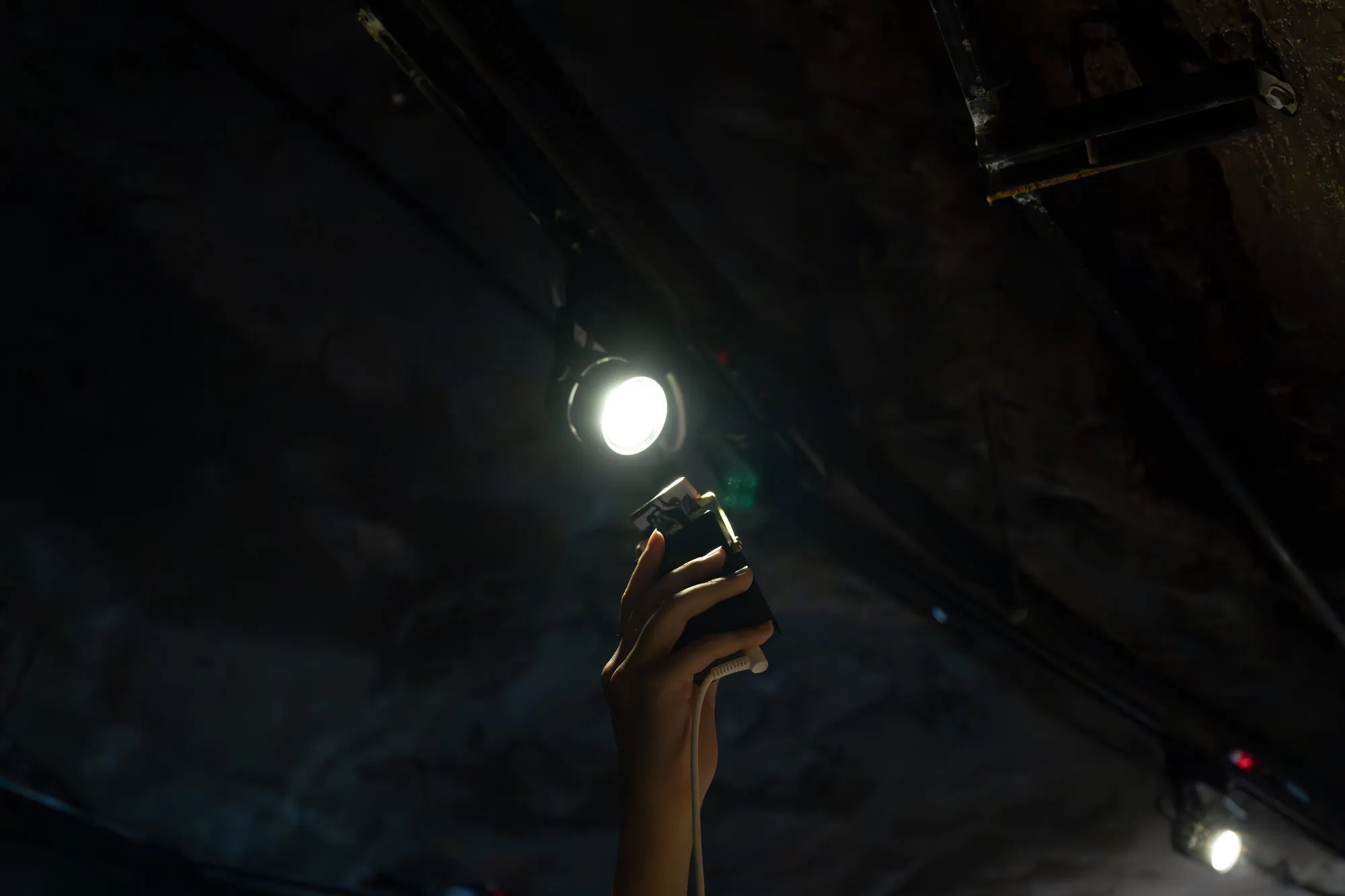
Light is usually regarded as a medium through which we see the world, whether as illumination or as an image. This series, however, focuses more on light's capacity to carry information. Starting from this technical understanding, I began to imagine that if different light sources in our everyday environment can flicker without us noticing, they might also be concealing certain kinds of information in the same way. Drawing on the method of converting optical signals into audible signals used in laser eavesdropping technology, I first built a detector. It uses a solar panel at the front to receive light, which is then connected to a small power amplifier module and headphones, allowing the fluctuations within the light to be heard. I then began modifying the light sources used in the work. I added a self-built modulator that feeds an electrical audio signal into the LED's power supply, causing the current to fluctuate and the LED to flicker according to the waveform of the sound.
Listen to the Light (2022) was the first work to emerge from this experiment and was also one of my university graduation projects. I wanted to explore the idea of sound being stored within light. I recorded the sounds of people working during exhibition installation and distributed these recordings among several small LEDs. Because the production process was relatively rushed, I did not develop the physical forms of the light sources in much detail, but instead began by testing several possibilities. During this process, I discovered an interesting phenomenon: the same beam of light could appear entirely different to the human eye and to a sensor. The rapid fluctuations of light are integrated by our visual system into what appears to be a stable light source, while a photosensitive component can still detect the fluctuations as readable signals. Although this phenomenon was already familiar to me through the experience of using cameras, something felt different when the flickering carried recognizable sounds or specific information rather than simply the periodic changes produced by dimming. It seemed to open up a much larger space within the light source, creating the feeling that something existed inside it. Although the light source did not physically contain such a large space, the sound seemed to emerge from within the luminous object itself.
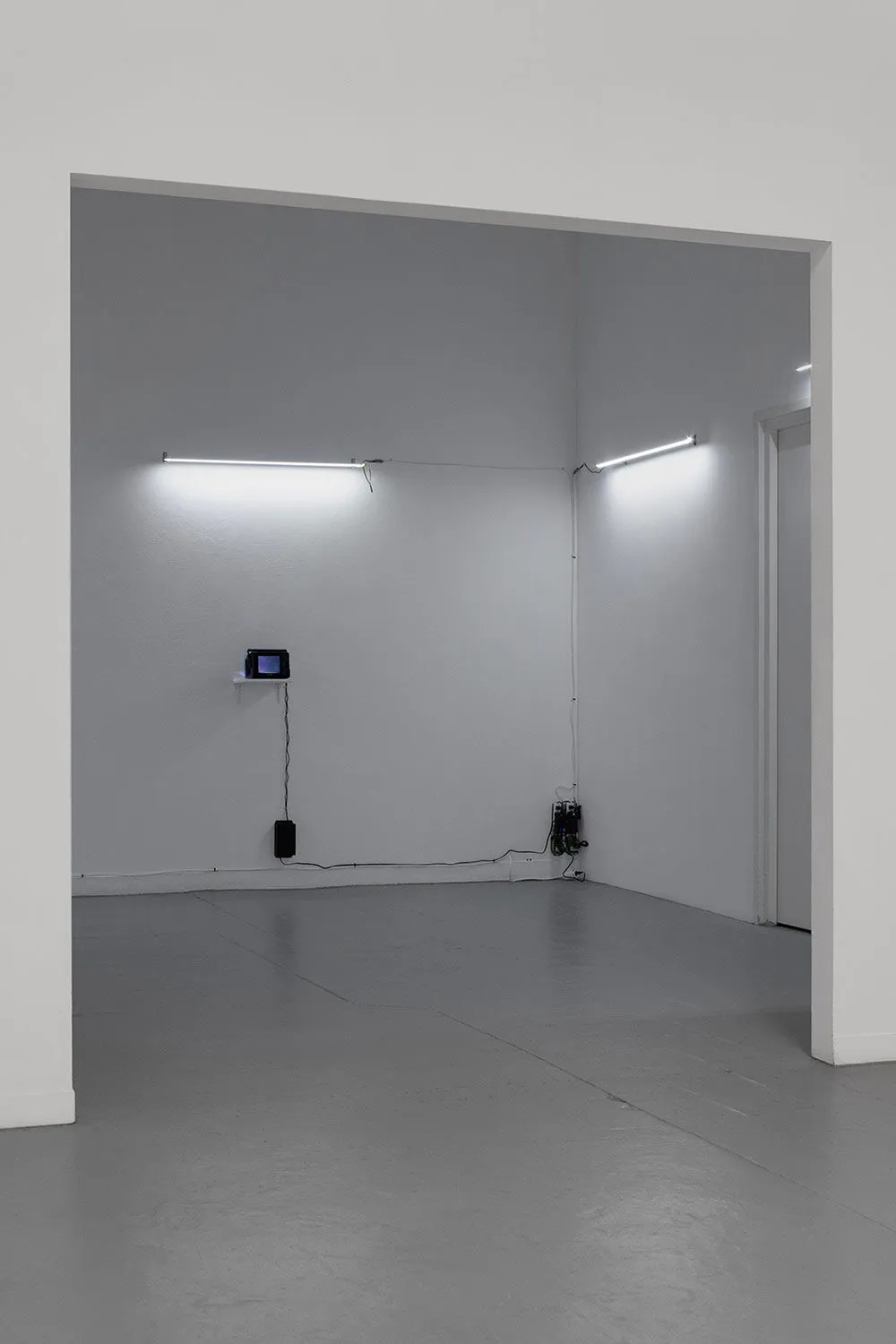
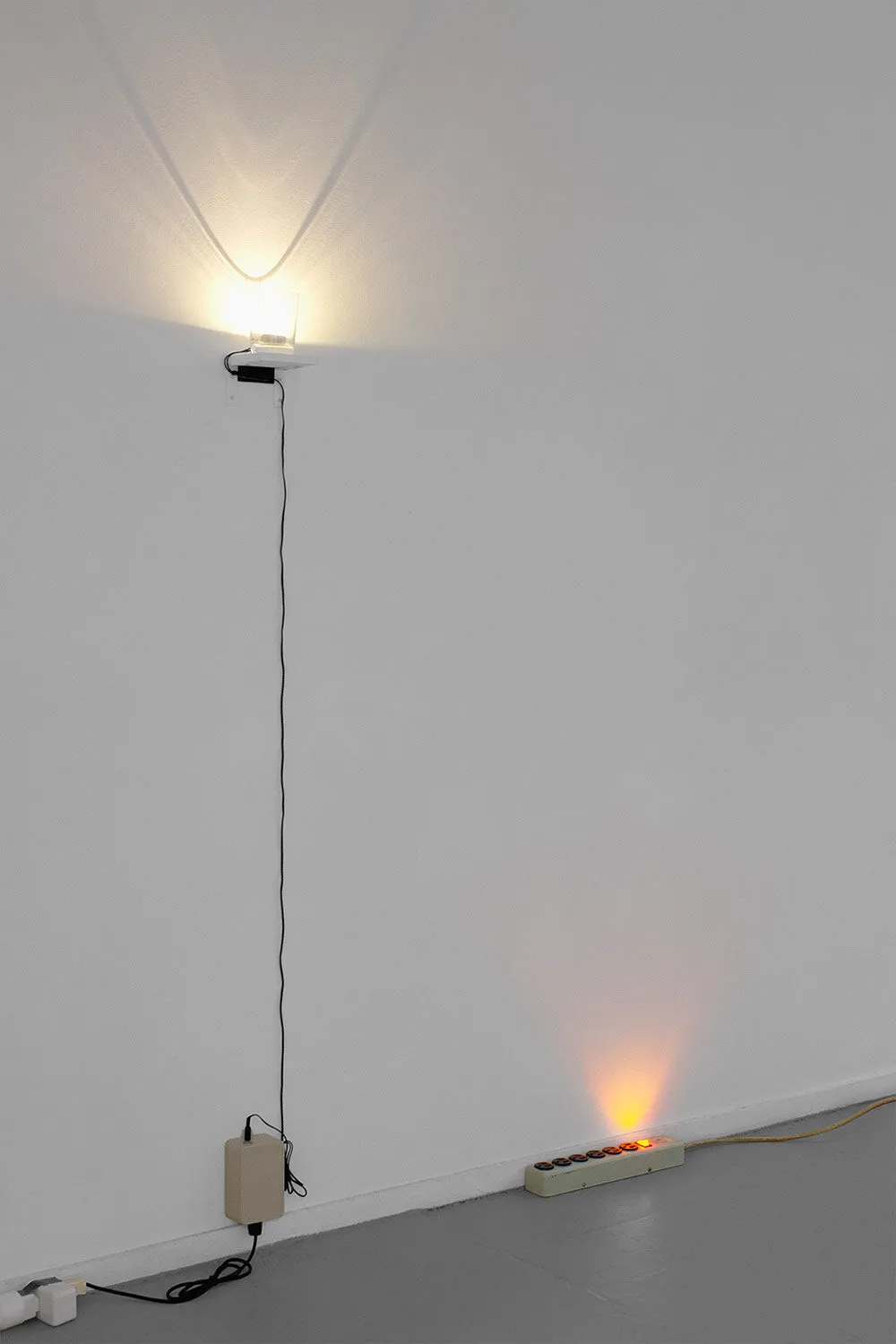
In 2024, the work was invited to an exhibition centered on everyday life, which gave me the opportunity to develop Listen to the Light – Routine (2024). In this version, I explored the forms of luminous objects more deeply and also began incorporating spatial intervention. In addition to several illuminated objects, I replaced the gallery's existing lighting with fixtures I had made. As a result, light carrying information was no longer limited to objects that could be identified as artworks, but also became part of the exhibition space's general illumination. The sounds used to modulate the lights came from recordings made outside my window at dawn, along with fragments of electronic sounds from my other works. Together with the objects I selected, I hoped to conceptually open up a breathing space within an enclosed interior, extending it upward or outward. I also wanted to encourage a renewed awareness of things that are easily overlooked in everyday life through the act of detection. In this exhibition, both the area covered by light and the space through which visitors could move became much larger. This revealed another aspect of the work that I had not previously noticed but found worth exploring further: because light spreads throughout a space, the gallery itself began to function like a spatial mixer without a conventional control interface. Once light leaves its source, it begins to spread, overlap, reflect, be absorbed, or become obstructed. When visitors move through the space holding the detector, they are essentially changing the angle and distance between the solar panel and different light sources. The blurred boundaries between these sources make the act of detection a form of subtle mixing determined by the viewer.
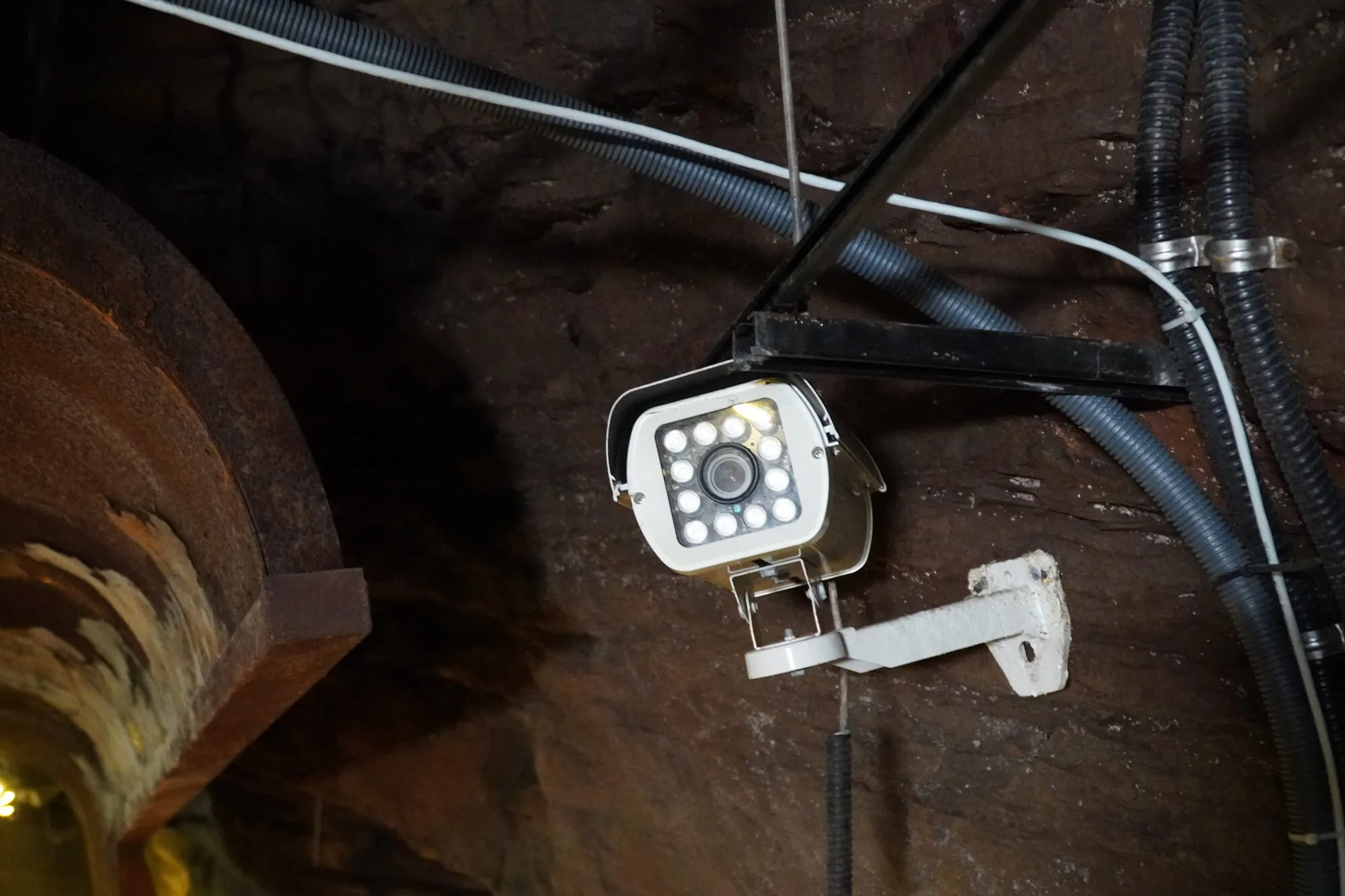
In 2025, I had the opportunity to participate in the Keelung Ciao Art Festival, which allowed me to further develop the work. Listen to the Light – Keelung Version (2025) was exhibited in the Xin'er Air Raid Shelter in Keelung. Built during the Japanese colonial period, the shelter originally served as a military facility during wartime. In this cave-like space, relatively isolated from the outside environment, people had to rely on limited signals to understand what was happening beyond its walls. This historical context led me to reconsider what "listening to light" might mean in such a place. Following the approach of the previous version, I replaced all the existing lighting in the shelter with track lights I had made. Entering the exhibition area was therefore equivalent to being immersed in modulated light, and visitors could use the detector to explore the signals carried by the lighting.
The sounds embedded in the lights were divided into three themes: sky, sea, and insects. Each connected to the shelter's history, Keelung's geographical environment, and people's imagination of the outside world. The first theme was the sky. Birdsong and aircraft sounds together evoked an imagined world beyond the shelter. During wartime, people hiding inside could not directly see what was happening outside. They could only perceive changes in the external environment indirectly, through the faint light entering the shelter and the sounds passing overhead. The second theme was the sea. Keelung was once known for a landscape called "Listening to the Tides at Xiandong," where people could hear the sound of waves echoing between the rocky walls of a cave. However, with the expansion of the harbor and changes to the coastal landscape, the environment in which people once listened to the tides has also changed. By embedding the sound of waves into the lighting, I attempted to evoke this gradually disappearing memory of listening to the sea. The third theme was insects. A wartime air raid propaganda song once compared the sound of approaching military aircraft to the buzzing of mosquitoes and dragonflies, using the sounds of flying insects to evoke the presence of airplanes. Drawing on this historical reference, the work transforms insect sounds into another metaphor for memories of war.
During the installation, I encountered an unexpected phenomenon. I discovered that the detector could receive not only the signals from the LED lights I had designed, but also infrared light emitted by a surveillance camera. Infrared light is invisible to the human eye, yet to the detector, it is still a form of light capable of carrying signals. Fluctuations in the electrical current generated by the camera's control circuitry were transmitted through its infrared light and converted into sound. What I heard resembled a helicopter hovering overhead, unexpectedly echoing the historical context of the Xin'er Air Raid Shelter.
Using detection as an artistic method, Christina Kubisch invites audiences to wear specially designed induction headphones and move through the city in search of electromagnetic signals hidden in the environment. She also embeds sounds into artworks as electromagnetic signals, allowing visitors to discover them through their own exploration. Her practice makes otherwise imperceptible electromagnetic activity perceptible, while turning detection into a way of sensing and reading the environment anew. The Listen to the Light series similarly uses detectors to allow audiences to encounter signals that are difficult to perceive in everyday life. Beyond revealing imperceptible signals, however, I also wanted the work to exist without necessarily announcing itself through its appearance. Instead, sound could be hidden within objects that already served a practical function. This is why I gradually began to focus more on the exhibition space's existing lighting. For visitors without a detector, these lights remain ordinary sources of illumination. But when they put on the headphones, lighting that was previously treated as part of the background becomes something to explore. Spaces that appear empty or unchanged begin to reveal another aspect of themselves. My experience in Keelung also raised another interesting question: when existing and deliberately embedded signals coexist within the same environment, what exactly are visitors discovering? Are they encountering fluctuations that were already present, or messages intentionally left behind by the artist? The detector allows signals to be heard, but it does not necessarily reveal their origins or intentions.
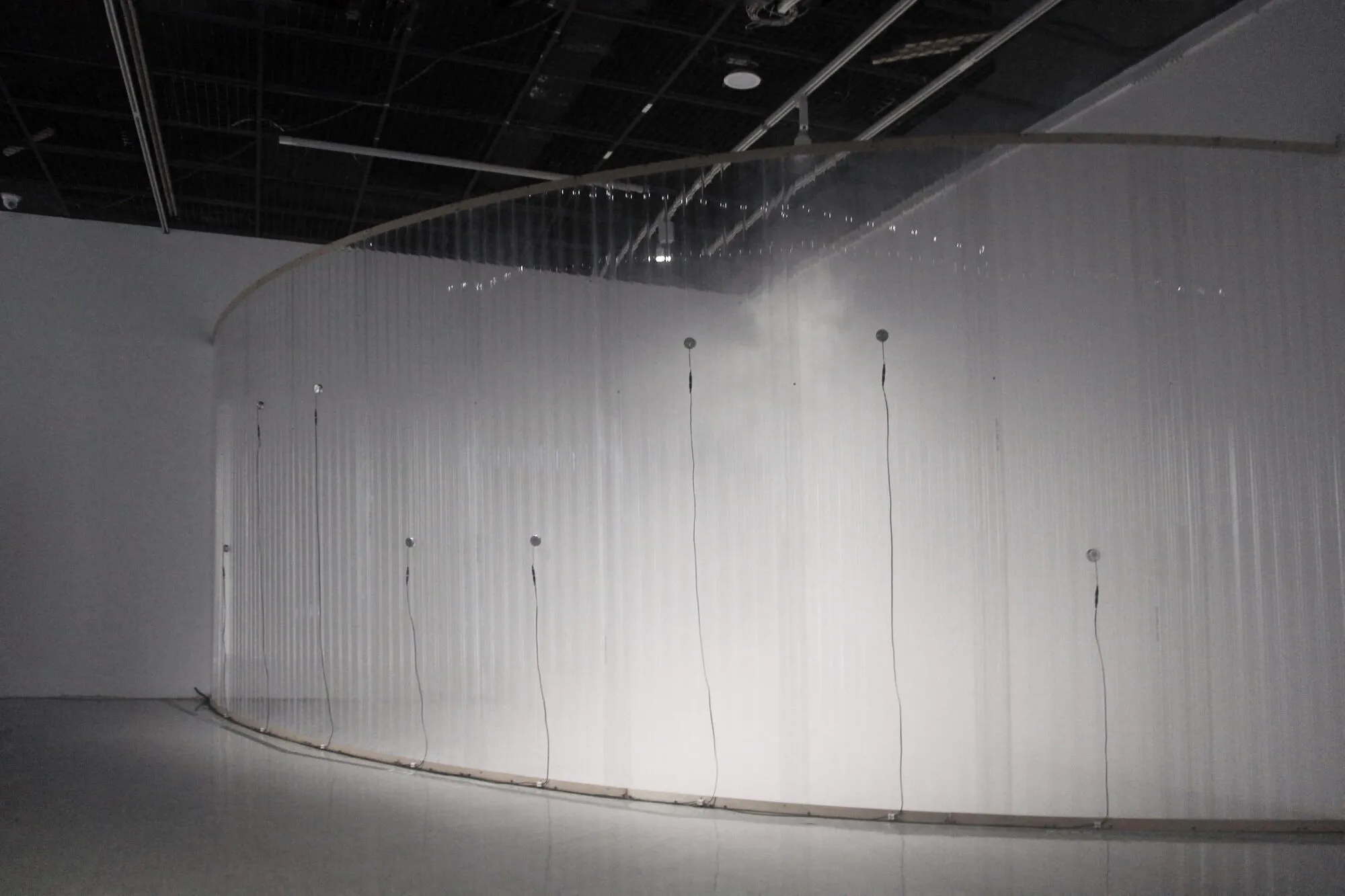
Myst series (2023–2025) Another application of laser microphone technology in my practice is the Myst series. Unlike the Listen to the Light series, the Myst series does not embed sound into light, but instead directly amplifies "interference." Myst (2023) originated from my interest in fantasy films and television series. When an unfamiliar creature is introduced, what fascinates me most is often the phenomena that precede its appearance, such as its smell, sound, or the vibrations caused by its body. In this work, I attempted to create the illusion of a creature without a clearly defined form through real physical mechanisms.
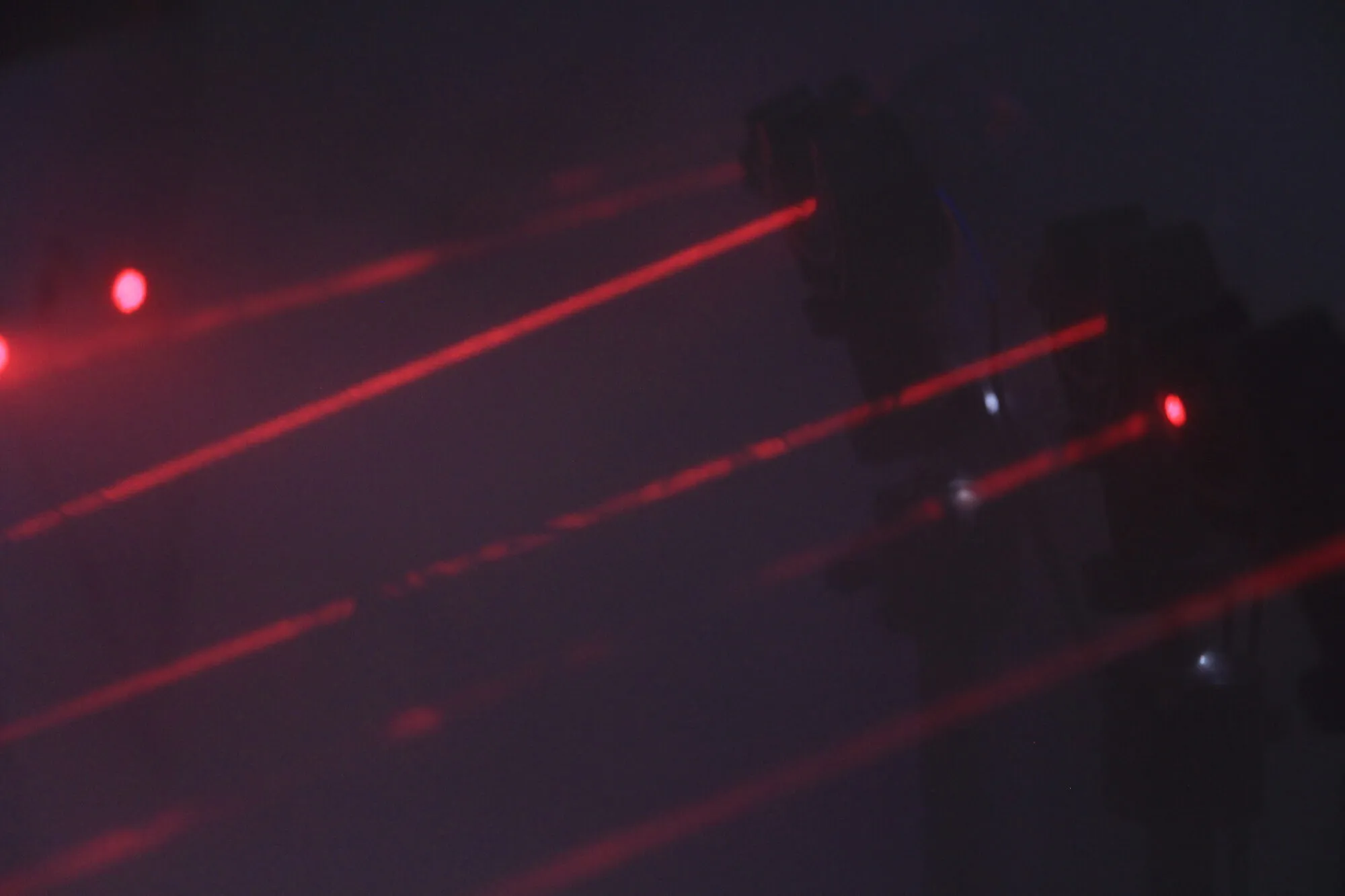
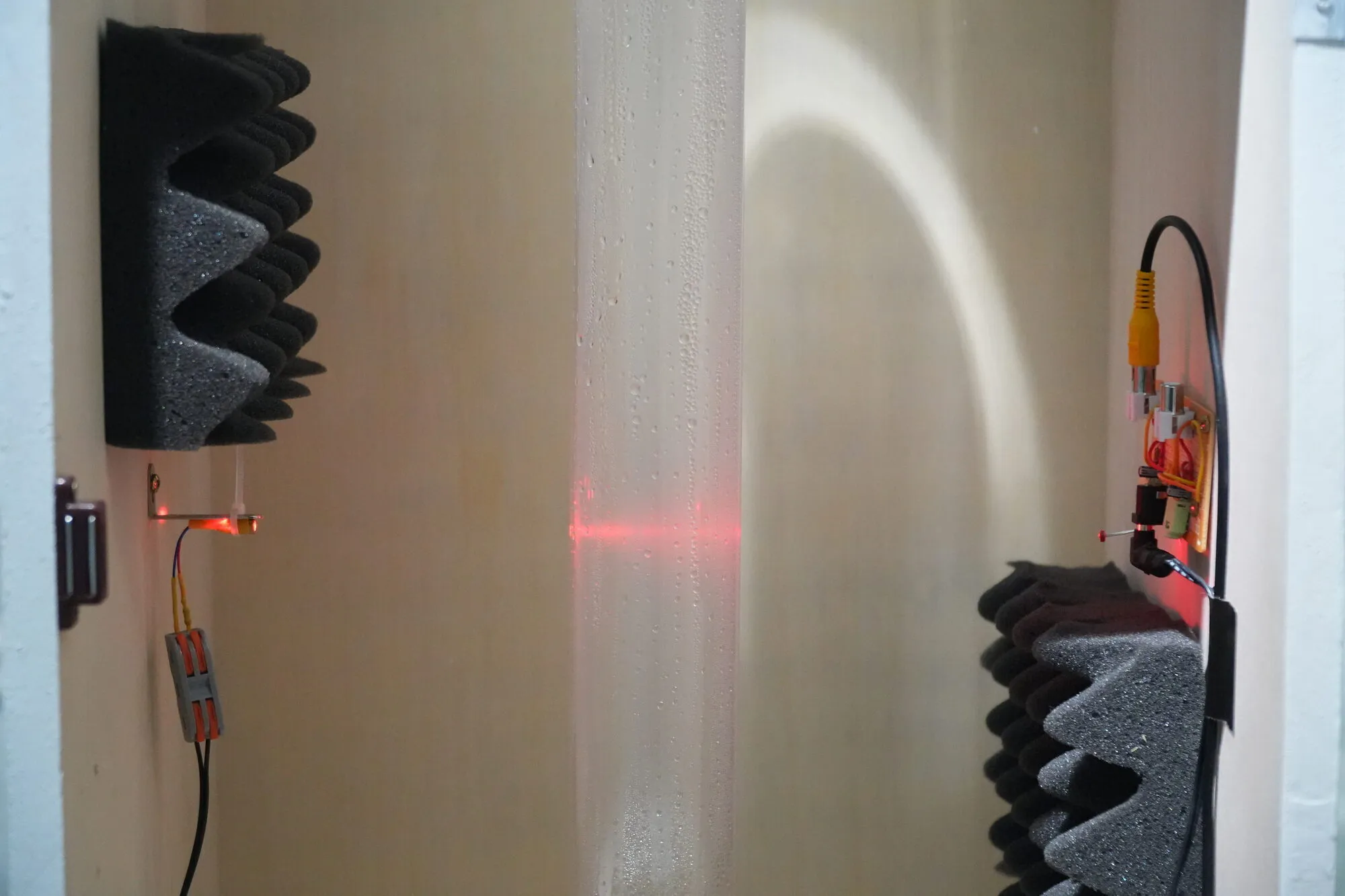
The installation consists of vibration speakers, corrugated panels, a laser, a light-dependent resistor, amplification components, and water mist. Mist disperses from a water tank, and countless tiny droplets continuously pass through the path of the laser beam, causing fluctuations in the light signal received by the light-dependent resistor and generating low-frequency noise. I then amplify this signal and play it through speakers attached to the corrugated panels, transforming the noise produced by the interference of water mist into vibrations across an entire wall of corrugated panels. The space enclosed by the corrugated panels contains mist without a fixed form, while a monster-like low rumble fills the surrounding environment, resembling the mysterious phenomena that precede the appearance of a creature. I think the mysterious quality of this work comes not only from its original conceptual arrangement, but also from a transformation of scale. An initially subtle phenomenon becomes an event that occupies an entire space through a series of transductions. Furthermore, the sound emerges from real materials and physical cause-and-effect relationships. When the intensity of what we experience seems disproportionate to the scale of its physical source, our habitual intuition about cause and effect begins to loosen. This real phenomenon seems to open up a space between physical facts and sensory experience, allowing room for the unknown and the imagination.
After exhibiting the work at a sound art festival and the National Art Exhibition, I found that its use of water and its involvement with the entire exhibition space often required dealing with complicated technical and site-specific issues. I therefore took the opportunity of my solo exhibition to develop another version that would be relatively easier to install and exhibit: Myst (Box Version) (2025). In this version, I further restricted the movement of the mist to a series of small enclosures. They resemble breeding tanks, but remain completely empty before the mist appears. The mist generator and water tank are hidden inside wooden display plinths, while the laser and light-dependent resistor are installed midway along the tube connecting the water tank to the transparent enclosure. The mechanism remains the same, but instead of vibrating corrugated panels, the sound is transmitted through the gallery walls. Beyond making the work easier to exhibit, I also wanted the enclosures to make the formless mist appear like some kind of unknown creature being raised or confined. The transparent boxes suggest that there is something inside to be observed, yet what visitors actually see is only mist continuously gathering, flowing, and dissipating.
During my solo exhibition, a curator mentioned that the work reminded them of Hans Haacke's Condensation Cube. The two works share remarkably similar forms and methods. In Condensation Cube (1963–1965), a small amount of water is enclosed in a transparent acrylic box, where it evaporates and condenses in response to changes in the surrounding temperature, creating a continuously changing state within the container. Beyond their visual similarities, both works establish conditions for material activity through the use of containers, making the movement and transformation of water, which might otherwise go unnoticed, something that can be observed. The difference is that the changes in Condensation Cube are driven by the surrounding environment, ultimately revealing how an enclosed system responds to external temperature and the passage of time. In Myst (Box Version) (2025), however, the mist itself becomes the source of interference. As it passes through the laser beam, its movement is converted into sound, which then extends outward as vibrations across the gallery walls.
Beyond the original motivation behind this series, I also came to realize that the interference of water mist with light is essentially a form of signal processing. In this case, the process is transferred from electronic circuits or computer programs into physical space, functioning almost like a distortion effect in which physical materials actively participate. This realization has also opened up many more possibilities for how I imagine developing future works!

Conclusion Converting light into sound is not a new discovery. The related mechanisms of photoelectric conversion have long been widely used in everyday life, including the laser eavesdropping technology mentioned earlier, fiber-optic communication, and other optical sensing technologies. However, when we engage with this technology through the act of detection, rather than using it for data transmission or measurement, it feels as though we have gained an additional sensory receptor. Through listening, we can begin to understand the temporal structure of light in a different way, or perceive subtle phenomena revealed by light.
What I find interesting is that this new sense does not provide explanations. In the air raid shelter in Keelung, I naturally associated the signals received from the surveillance camera with the sound of a helicopter. Similarly, in the Myst series, the water mist does not actually produce a low rumble. These associations arise from our previous auditory experiences, through which we attempt to make sense of unfamiliar signals. Although there is a discrepancy between these interpretations and the actual physical phenomena, the similarities between them may also suggest some kind of underlying connection. Both the question of "indistinguishable origins and intentions" raised earlier and the "gap between association and reality" discussed here turn listening into a form of speculation.
序 在一次偶然看到網路上關於雷射竊聽技術的介紹,我發覺或許這項技術可以為我對聲音的研究發展出新的路線。這個技術原本的原理是將雷射光對準一面窗戶,並在其反射的路徑上安裝一個感光元件用來讀取雷射光的波動,當窗戶的另一邊有人在講話時,聲音透過空氣傳導到窗戶,窗戶的振動會改變反射光的路徑、相位或強度,感光元件接收到後將此訊號放大,接著就能聽見他們講話的聲音。當訊號以可見光作為載體傳輸,它形成了一條實際穿越物理空間的有形的路徑,我感覺這很像是一種訊號的「現形」,而光在抵達接收端前可能被遮蔽、折射或干擾,這樣的性質也為我提供了讓實體物質介入的操作空間。
Listen to the Light series (2022–2025) 電力驅動的人造光源不同於自然光(如太陽),它依賴著驅動電路及各種電子元件的轉換,最後出現的光往往因此夾帶著不同頻率的波動,這點也可以從調光機制中很明顯的認知,以LED為例,常見的調光方式之一是脈衝寬度調變(PWM)透過快速切換電流的開啟與關閉,以調整每個週期內通電時間的比例來控制亮度。我們所看見的連續光線,實際上可能是以肉眼難以分辨的速度快速閃爍的結果。而另一項更為切身可以觀察到這種現象的經歷就是當我們要拍攝投影畫面或是燈光時,由於攝影機的快門速度與影像或光的變化頻率存在差異,有時就會看到畫面更新的線條或是從攝影機顯示幕上看到燈光的閃爍。光通常被視為觀看世界的媒介,一種照明或是影像,而這系列作品則更著重讓光擔任攜帶訊息的角色,從這樣的技術認知出發,試著想像既然我們日常生活中的不同光源可以在我們察覺不到的狀態下閃爍,那它們也可能以同樣的方式藏著某種訊息。結合雷射竊聽技術中將光訊號放大成聲音訊號的方法,我首先製作了一種探測器,這個探測器可以透過前方的太陽能板接收光,並且經過一個小型的功率放大模組後接上耳機便能聽到光其中的波動訊號。接著我針對作品中的光進行改造,我在光源加上一個自製的調變器,這個調變器將聲音的電訊號接進LED的電源中,使得電源產生波動,進而造成LED隨著聲音的波形產生不同的閃爍。
Listen to the Light (2022) 是我這項實驗的第一件作品也是我大學畢業的其中一件作品,這件作品想嘗試創造的是一種聲音被光儲存的想像,我錄下布展時大家工作的聲音,並將那些聲音分配到幾個小燈珠中,因為這件作品的創作過程較為倉促,沒有針對光源做太多形式上的處理,只是先想幾種可能性。在過程中我發現這樣的做法形成了一種很有趣的現象,同一束光在人的視覺與感測器中顯現出了截然不同的狀態,光的高速變化會被我們的視覺系統整合成穩定的光,但對光敏元件而言卻能保有可被讀取的訊號波動,而當這些閃爍不是單純的調光產生的週期性變化而是具有具體訊息或可辨認的聲響時,它似乎為那個光源打開了更大的空間,會有一種這個光裡面有什麼的感覺,明明這個光源在物理現實中並不擁有這麼大的空間,但聲音卻彷彿真的來自於發光體內部。
接著時間來到2024,這件作品受邀到一檔以日常為題的展覽,藉此機會發展出了 Listen to the Light – Routine (2024) ,這件作品對於發光物件有較為深入的思考,也參考到空間介入的方法,除了幾個發光物件外,我也將展場原本的照明替換成我製作的燈具,因此夾帶訊息的光不只存在於可以被辨明的作品物件,也同時存在於整個場地的照明。驅動燈光的聲音內容取材自我家清晨窗外的錄音,和一些細碎的來自我的其他作品的電子聲響,配合我選用的物件,希望為一個封閉的室內在概念上往上或往外打開一個可以呼吸的空間,也是透過探測這個行為對日常容易忽略的事物的重新觀察。在這次的展出中,「光」所涵蓋的和觀眾可遊走的範圍都變得更大,也讓作品出現另一層我之前沒有發現卻值得進一步思考的點,因為光會渲染空間,使得展場本身變成很像是一台沒有操作介面的空間混音器(mixer)。光離開燈具後會擴散、重疊、反射、被吸收或被遮蔽,當觀眾拿著探測器在空間中移動,本質上其實是在改變太陽能板與不同光源的角度與距離,而光與光之間模糊的界線更讓探測這個行為變成一種由觀者決定的細緻mixing!
2025有幸參與基隆潮藝術,也順勢將這件作品做了進一步延伸。 Listen to the Light – Keelung Version (2025) 展出於基隆的信二防空洞,這座防空洞建於日治時期,是戰時的軍事設施。在這個與外部環境相對隔絕的洞穴空間中,人們必須依靠有限的訊號來理解外界的情況,而這樣的歷史意象也讓我重新思考「聽光」在這個場所中可能隱含的意義。我參照上一次的方法將防空洞原有的照明全數替換成我製作的軌道燈,觀眾進入我的展區即相當於沐浴在經調變的燈光之中,觀眾可以拿起探測器對展場中的燈光進行探測。燈光中所藏的聲音內容分為三個主題,分別是天空、海與蟲,它們各自連結了防空洞的歷史、基隆的地理環境,以及人們對外部世界的想像。一是天空:鳥鳴與飛機聲共同構成對防空洞外部世界的想像。戰時躲藏於洞中的人們,無法直接觀看外面的景象,只能透過洞口滲入的微光,以及頭頂傳來的聲音,間接感知外界的變化;二是海:基隆過去有「仙洞聽潮」的景觀,人們能夠在洞穴中聽見海浪於岩壁間迴盪的聲音,然而隨著港口擴建與海岸地貌的改變,過去聆聽海潮的環境也產生了變化。我將海浪聲隱藏於燈光之中,試圖重新喚起這段逐漸消逝的「聽潮」記憶;三是蟲:戰時防空宣傳歌曲曾以「嗡嗡的蚊子、蜻蜓聲」比喻來襲的軍機,透過昆蟲飛行的聲音想像飛機的存在。作品借用這段歷史意象,將昆蟲鳴聲轉化為戰爭記憶的另一種隱喻。在布展時,我還遇到了一個意料之外的現象,我發現探測器除了接收到我設計的 LED 光源,也能接收到監視器所發出的紅外線。對人類而言,紅外線甚至是肉眼不可見,但對探測器而言,它同樣是一種可以攜帶訊號的光。監視器控制電路所產生的電流波動經由紅外線被轉換為聲音,聽起來像盤旋在上空的直升機,意外地呼應了信二防空洞的歷史情境。
以探測作為方法,Christina Kubisch讓觀眾戴上特製的感應耳機在城市中移動尋找隱藏在環境中的電磁訊號,或是將聲音以電磁訊號的方式置入作品,再讓觀眾自行探索。它同時使原本不可感的電磁活動變得可感,同時也讓探測變成是一種重新感知與閱讀環境的方法。Listen to the Light series 同樣利用探測器讓觀眾接觸日常難以察覺的訊號,而除了不可見訊號之外,我也希望這件作品不一定需要透過造型或物件才能成立,而是可以讓聲音藏在原本就具有功能的物件之中,這也是我後來會更著重於展場本身的照明的原因。對不使用探測器的觀眾而言那些照明仍然是一盞燈,但當觀眾戴上耳機,原本被視為背景的照明變成了可以被探索的對象,那些看似空曠或保持原樣的空間也呈現了出另一種樣貌。而基隆展出的經驗也讓我發覺另一個有趣的問題是,當既存與植入的訊號共存在同一個環境之中,觀眾所找到的是環境原本存在的訊號波動也可能是作者留下的訊息,探測器能夠讓訊號被聽見,卻無法同時說明它的來源與意圖。
Myst series (2023–2025) 關於雷射麥克風技術的應用另一項實踐是 Myst series ,不同於 Listen to the Light series , Myst series 沒有將聲音嵌入燈光中,而是直接放大「干擾」。 Myst (2023) ,源自於我對於奇幻影視劇的興趣,在描述一個異生物時,最吸引我的常常是他們現身之前所引發的現象,例如他們的氣味、聲音、或身軀引發的震動......。在這件作品中我試圖從真實的物理機制創造看不清形體的生物的幻象。裝置由震動喇叭、波浪板、雷射、光敏電阻、功率放大元件與水霧組成,水霧從水箱中散出,細小的小水滴不斷穿過雷射光的路徑,使得光敏電阻接收到的光訊號不斷變化形成低頻的雜訊,接著我將放大後的訊號進一步透過安裝在波浪板上的喇叭播出,藉此這個由水霧干擾所產生的噪音變成了整面波浪板牆面的震動。波浪板圍出的空間關著沒有固定形體的水霧,空間中瀰漫著類似怪物的低鳴,像是怪物現身前的神秘現象。我覺得它之所以神秘除了原本概念上的安排之外,也來自於一種尺度的擴張,原先細微的現象經過一連串轉導後變成整個空間的事件,再加上這個聲響是來自於真實的物質與因果關係。如果我們感受到結果的強度與其物理來源的尺度不相稱時,原本習慣用來理解原因與結果的直覺也可能隨之鬆動。而這個真實的現象似乎也就在物理事實與感官經驗之間打開了一個容納未知與想像的空間。
在經歷聲響藝術節與全國美展的展出後,因為使用水且涉及整個空間,在執行的過程經常要處理複雜的技術與場地問題,因此我利用個展的機會發展了另一個相對容易安裝及展出的版本 Myst (Box Version) (2025) 。這個版本我將水霧能夠活動的範圍做進一步規範在小型的箱體中,它會像是一個個養殖箱,但在水霧出現以前裡面空無一物。起霧器與水箱藏在木作展台中,雷射光與光敏電阻安裝在聯通水箱與透明箱體的管線中段,保持一樣的機制但聲音的震動從波浪板換成展場的牆面。除了為了方便展呈,我也希望透過箱體的形式,讓這些沒有固定形體的水霧看起來像是某種被飼養或監禁的未知生物,透明的箱體暗示著裡面存在某種可以被觀察的對象,可是觀眾實際看見的卻只有不斷聚集、流動與消散的水霧。在個展期間一位策展人談到這件作品讓他想到Hans Haacke的Condensation Cube。兩者其實共享著非常相似的形式與方法,Condensation Cube(1963–1965)將少量水封閉在透明壓克力箱中,水隨著環境溫度的變化蒸發、凝結,在箱體內形成持續變動的狀態。除了外觀上的相似,兩件作品也都透過容器建立物質活動的條件,讓原本不容易被注意的水的活動成為可被觀看的對象。Condensation Cube 的變化來自環境,最終呈現出的是封閉系統對外部溫度與時間的反應,而在 Myst (Box Version) (2025) 中,水霧本身就是干擾的來源,它穿過雷射被轉換成聲音,並往外延伸至整個展場牆面的震動。
在這系列作品中除了原本創作動機的想法之外,另一層面我也意識到水霧對光的這種干擾本質上其實是一種訊號處理(Signal Processing),有點類似於前面提及的 listen to the light series 把空間變成混音器的邏輯,訊號處理的過程從電路或程式被移入真實物理空間, Myst series 中的水霧受到氣流影響小水滴混亂的動態讓其對雷射光的干擾形成像是一個由物質參與的破音效果器(Distortion)。這層理解也為我對未來作品的想像開啟了更多的可能性!
結語 將光轉換為聲音並不是一項新穎的發現,相關的光電轉換機制早已廣泛應用於日常生活,例如前文提及的雷射竊聽、光纖或其他光學感測技術等。不過當我們以探測的形式接觸這項技術時,不同於資料傳輸或測量,而像是為我們新增了一個感官受器,我們得以透過聆聽重新理解光的時間結構或透過聆聽感受被光所揭示的微小現象。