





- Sound installation
- Year :
2025 - Materials :
- solar panels
- amplifier chips
- led lights
- Venues :
- Xiner Road Air Raid Shelter (TW)
Year : 2025
Materials : solar panels, amplifier chips, led lights
Venues : Xiner Road Air Raid Shelter (TW)
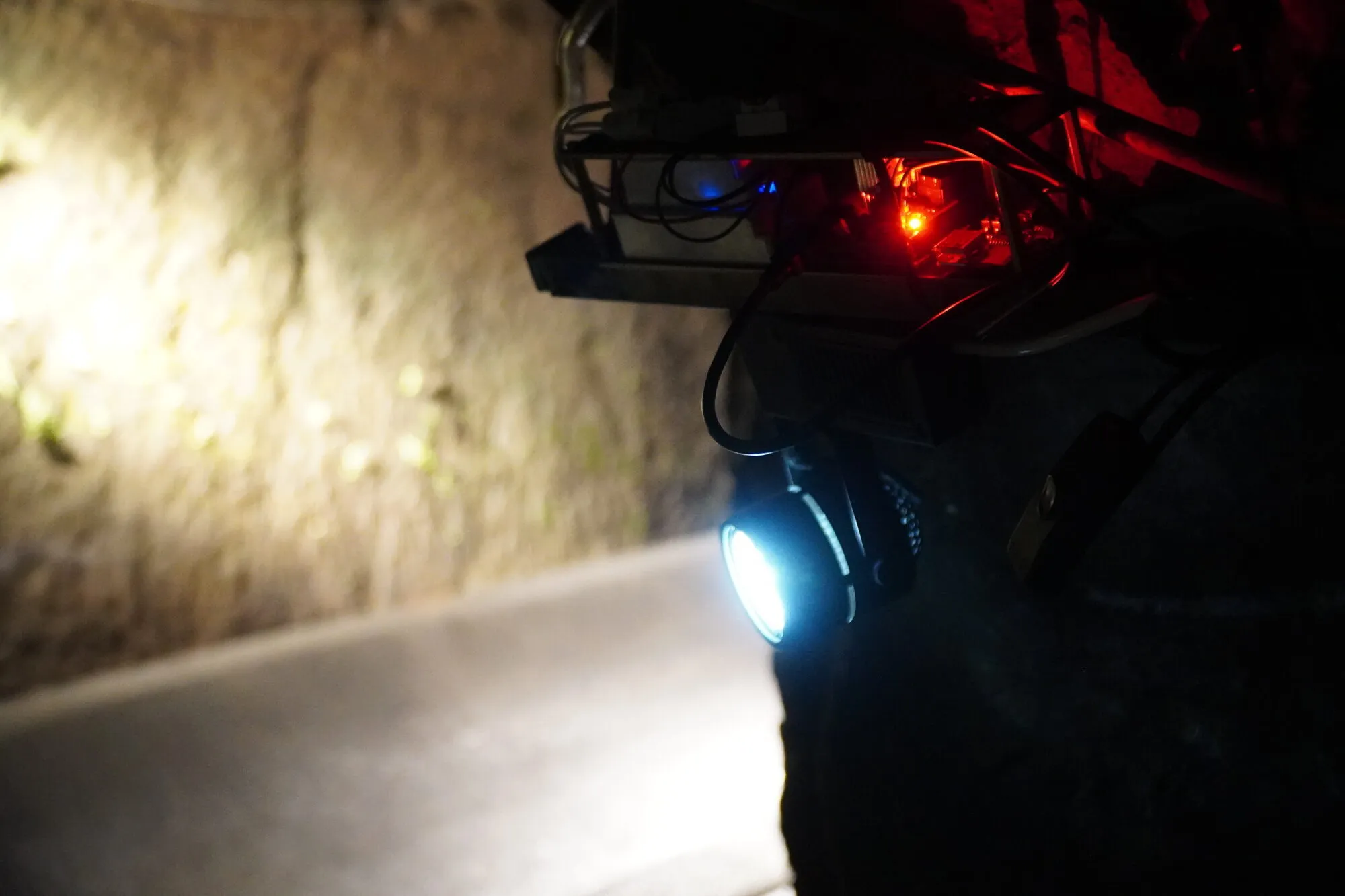
This site-specific installation was commissioned for Xiner Air Raid Shelter in Keelung (an air-raid shelter built during the Japanese colonial period in Taiwan). The work begins with the idea of "listening to light," imagining how people sheltering in air raid tunnels during wartime might have sensed changes in the outside world through the faint light entering the cave. The practice extends my previous research into laser eavesdropping technology, which reconstructs sound through the subtle vibrations of light. It also asks whether, as an air raid shelter transforms from a wartime refuge into a historical site, the light within the tunnel can acquire a new meaning, it become not merely as illumination, but as a medium connecting the shelter with both the outside world and its history.
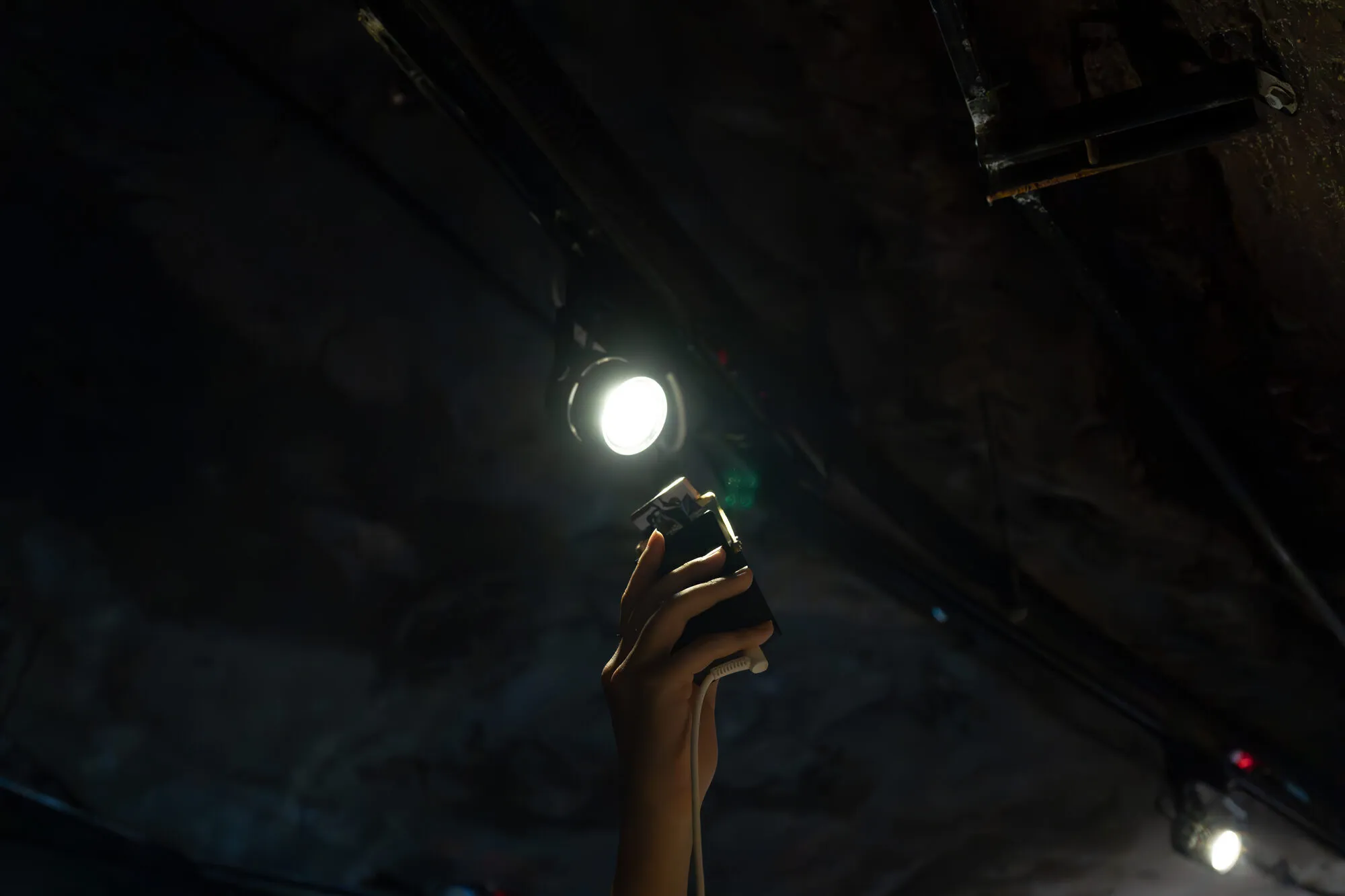
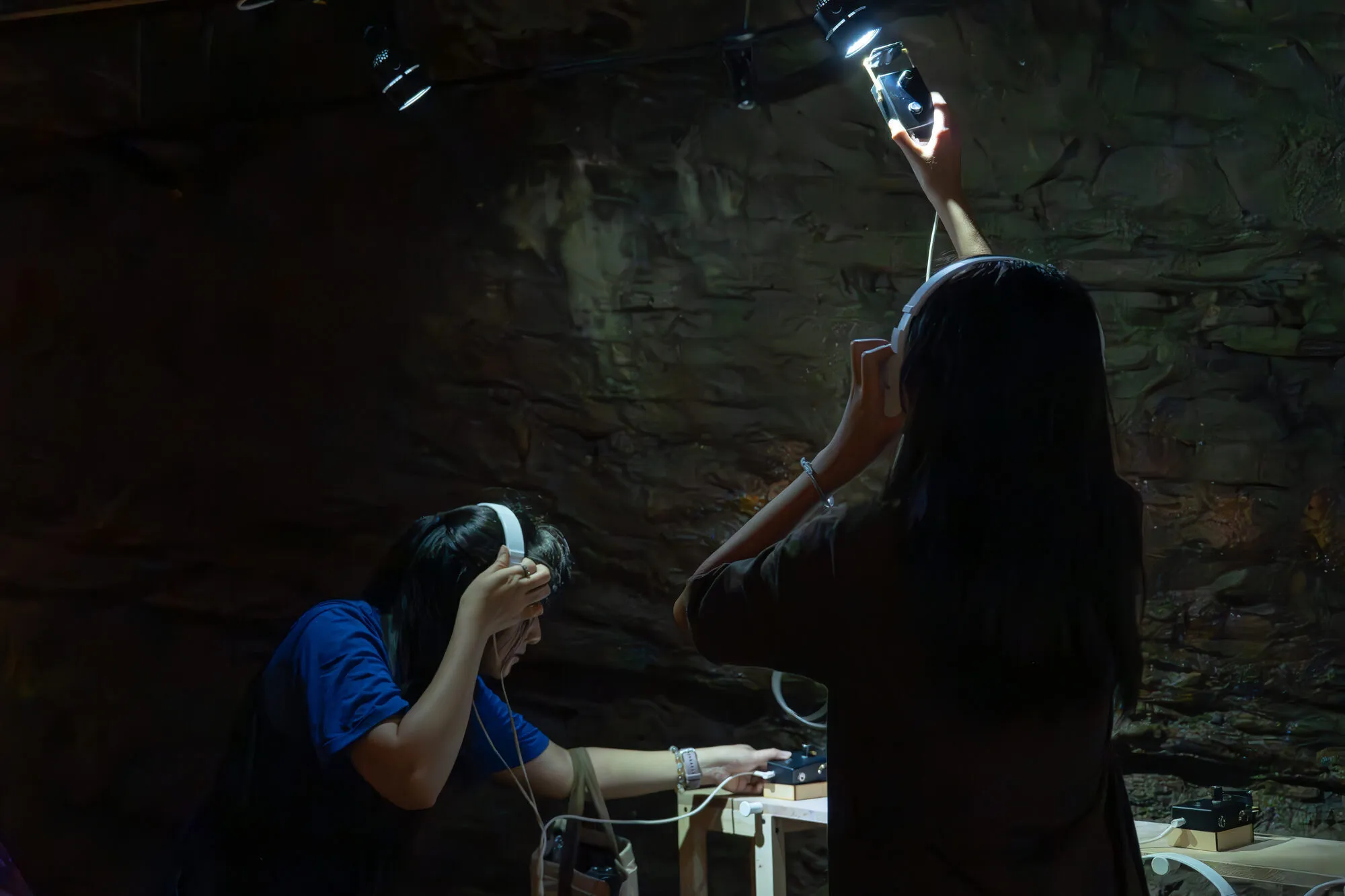
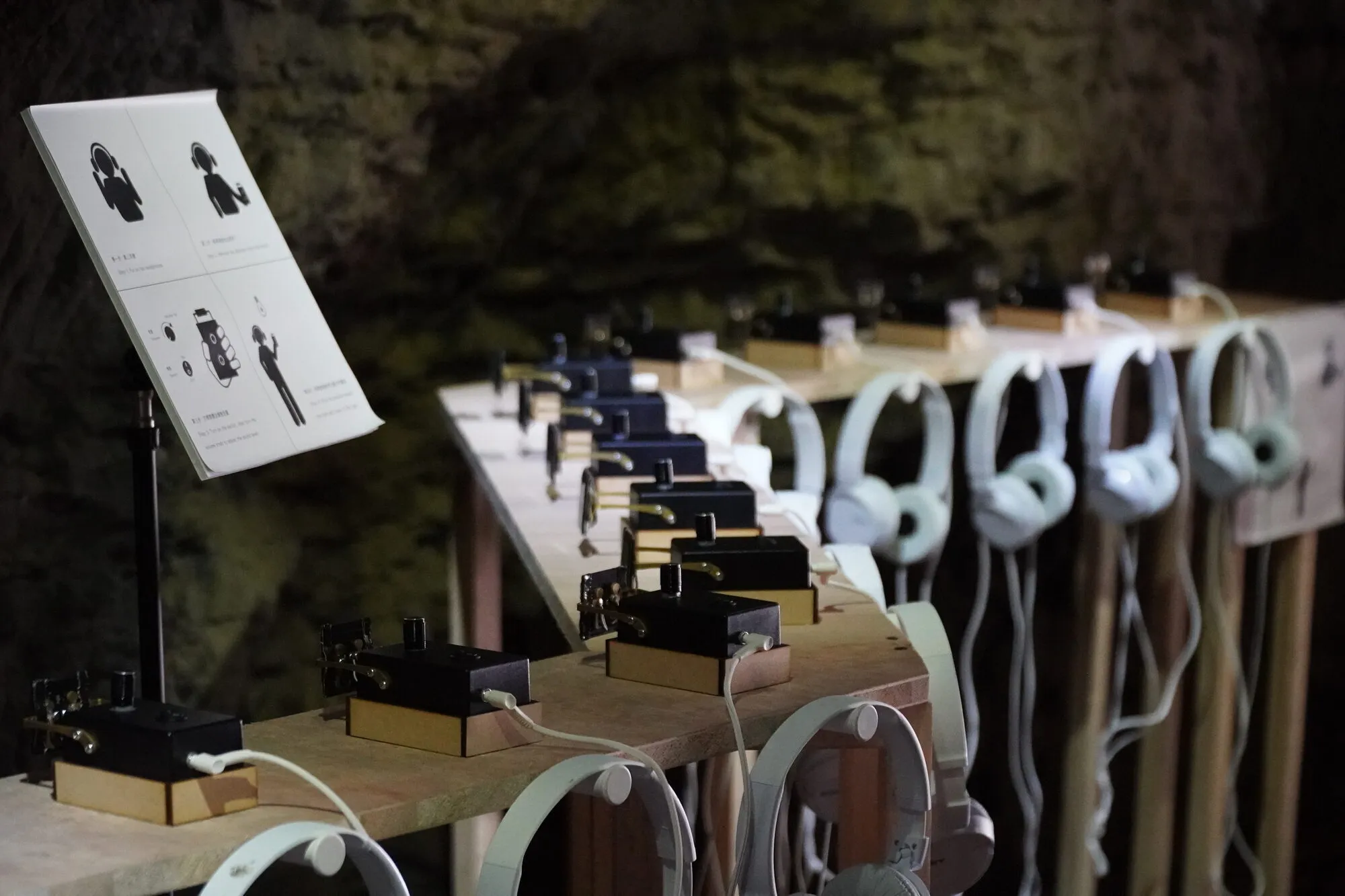
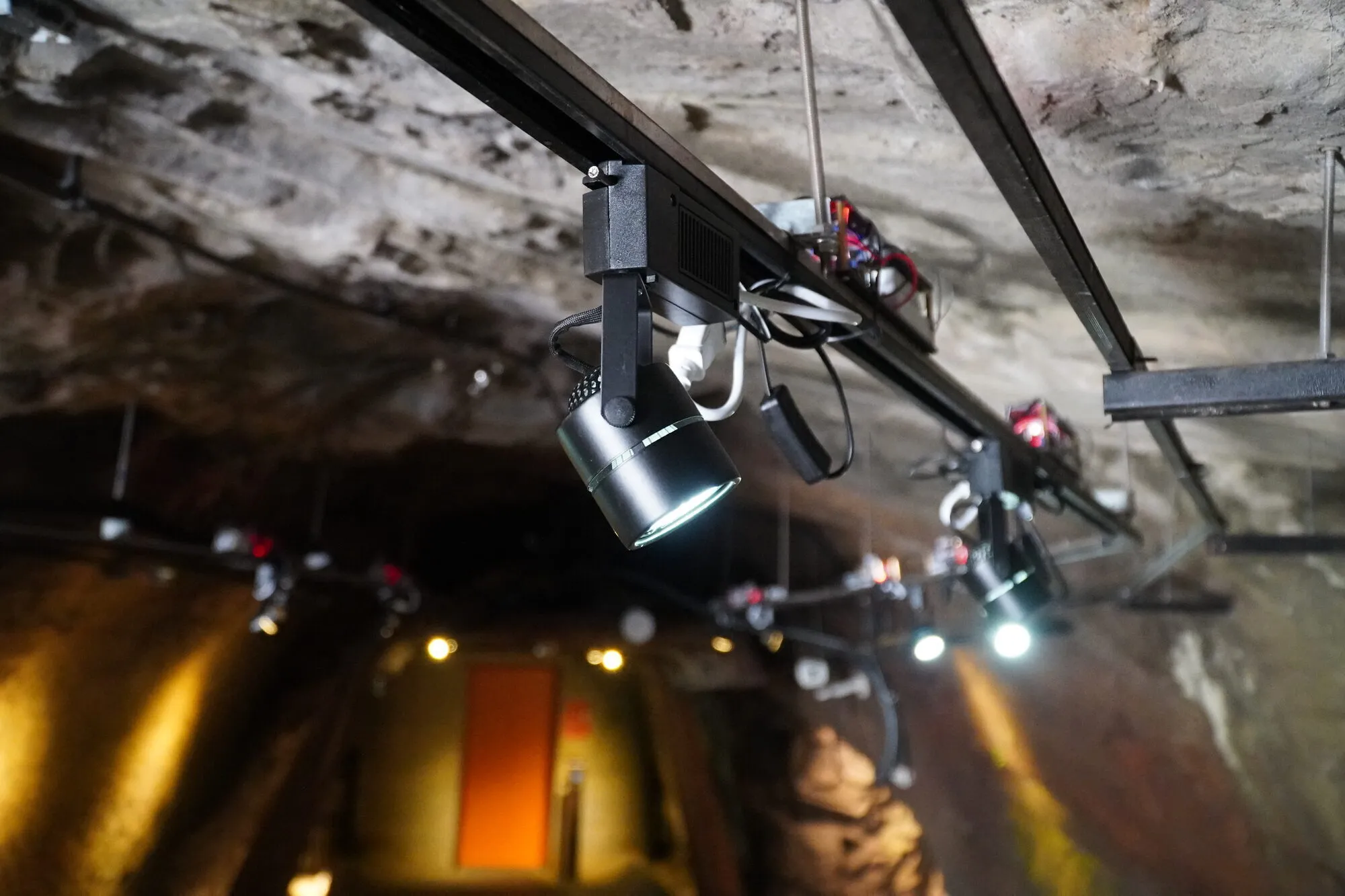
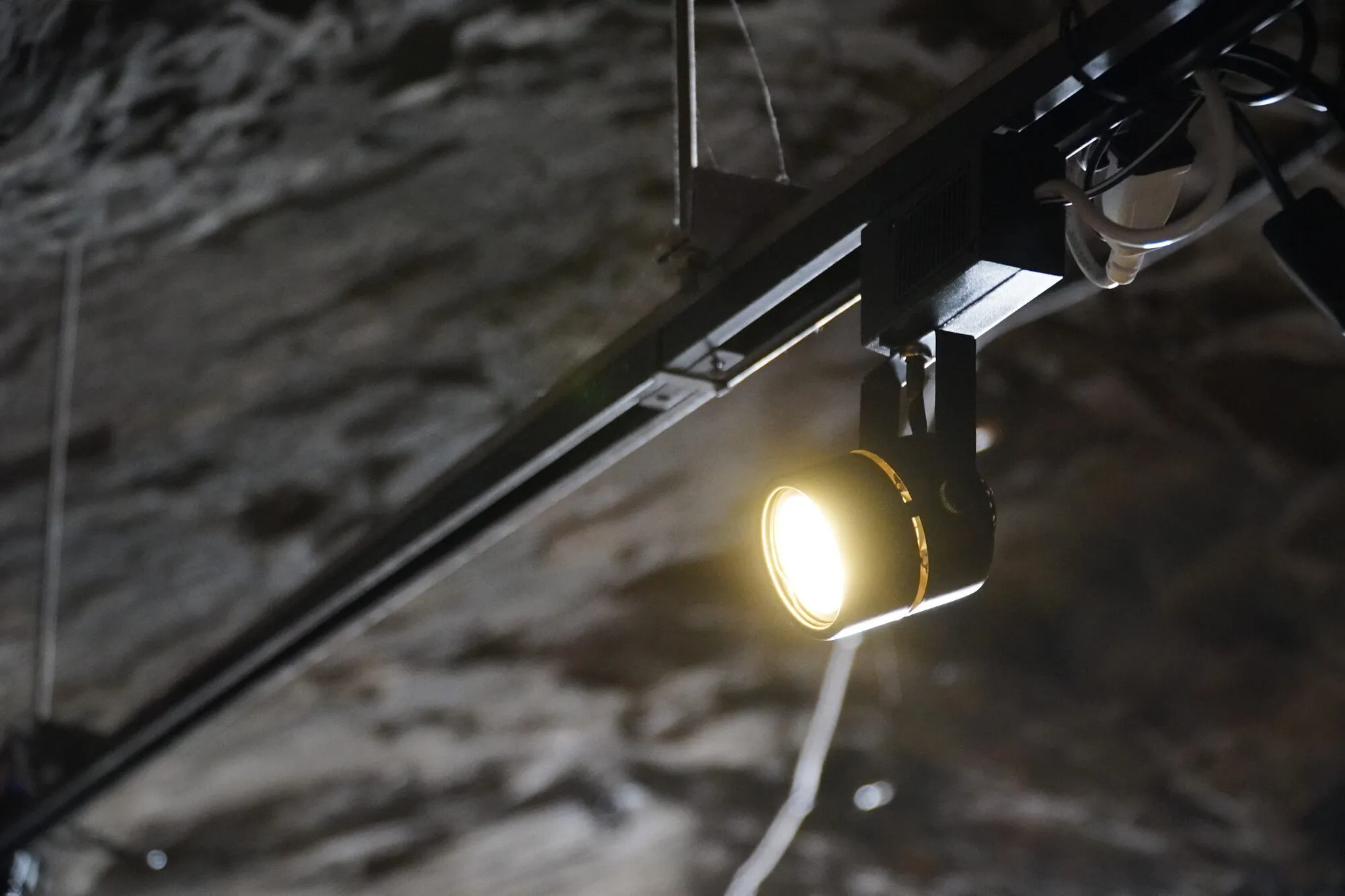
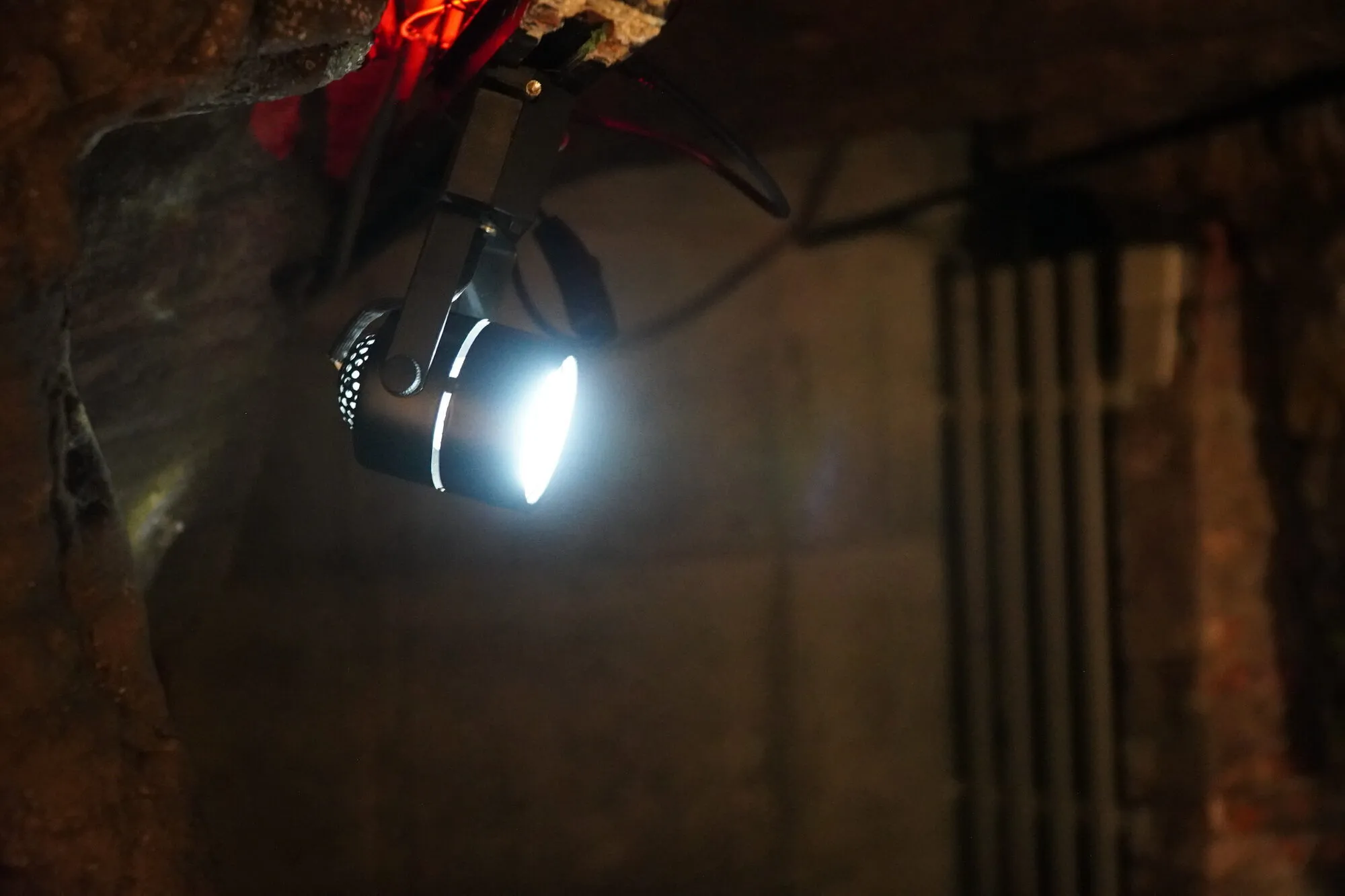
The existing lighting inside the tunnel is modified by modulating audio signals. Visitors explore the space with handheld solar-panel detectors, revealing the sounds and vibrations hidden beneath the seemingly silent lights. Three soundscapes are embedded within the lighting:
Sky Birdsong and the sound of aircraft imagine the world beyond the shelter through sound. Those taking refuge in the cave could only sense the outside indirectly, through the faint light entering the tunnel and the sounds overhead. Birdsong evokes the persistence of ordinary life and freedom, while aircraft remind us of the constant anxiety and threat of air raids. The two sounds coexist, revealing the sky as both a place of hope and a source of fear.
Sea Keelung was once known for "Xiandong Tingchao (Listening to the Tide at Xiandong)", where the sound of ocean waves echoed through the caves. This sensory experience gradually disappeared as the harbor expanded and the coastline was reclaimed. Hidden within the lighting, the sound of waves recalls this lost memory of listening to the tide.
Insects A wartime air defense propaganda song compares approaching military aircraft to the buzzing of mosquitoes and dragonflies, imagining aircraft through the sounds of flying insects. Drawing on this historical imagery, the work transforms insect calls into a metaphor for the memory of war.
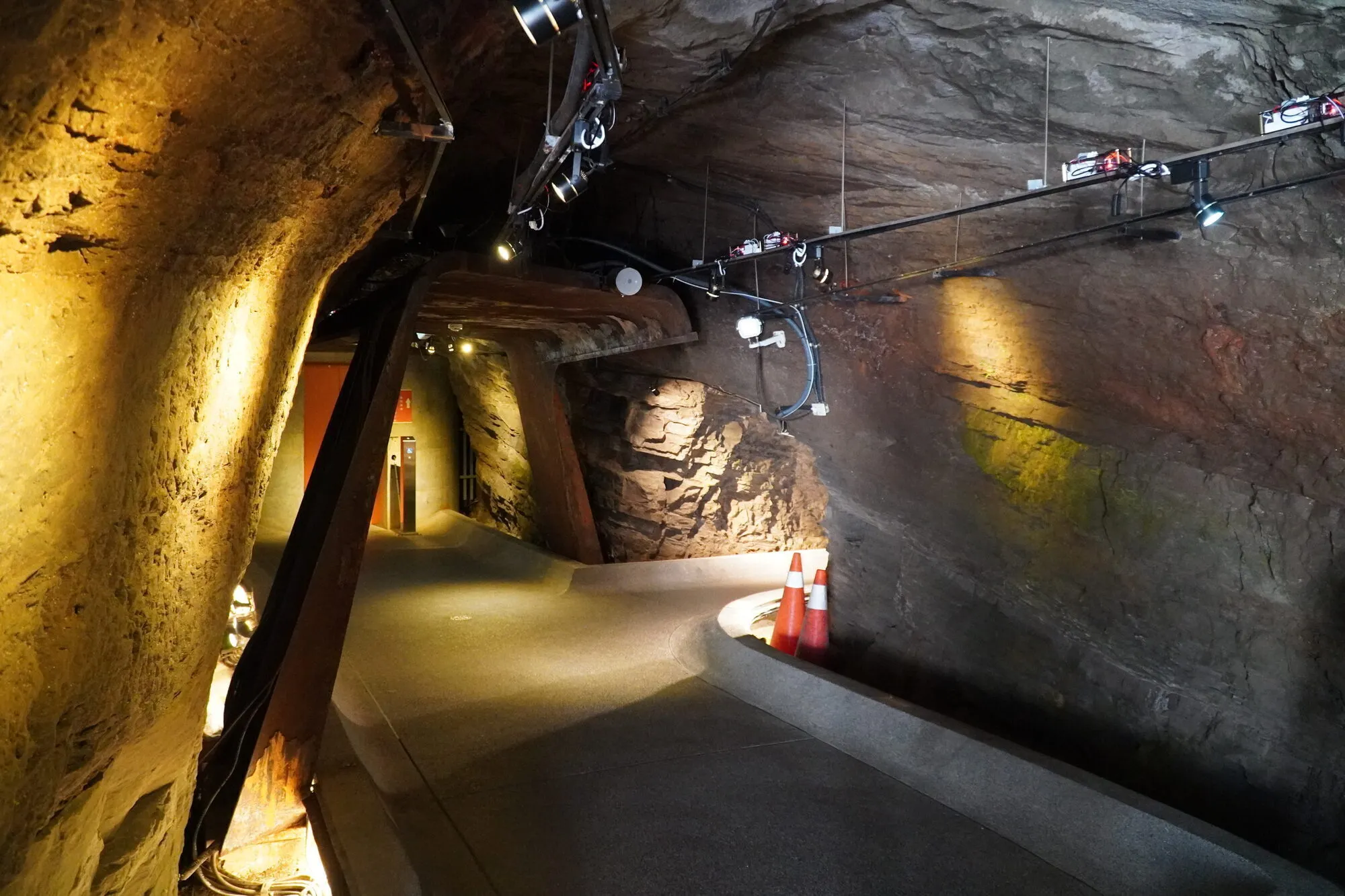
本件現地製作的裝置受邀為基隆信二防空洞(建於日治時期)創作。作品以「聆聽光」為出發點,想像戰時躲藏於防空洞中的人們,如何透過洞口透入的微弱光線,感知外部世界的變化。此作延續我對雷射竊聽技術的研究,一種透過光的細微振動重建聲音的方法,並進一步思考:當防空洞從戰時的避難空間轉變為歷史遺跡,洞穴中的光是否也能獲得新的意義,不再只是照明,而成為連結防空洞、外部世界與歷史記憶的媒介。
作品透過調變既有照明中的聲音訊號,重新介入防空洞內原有的燈光系統。觀眾手持太陽能板探測器在空間中探索,逐步揭露那些隱藏於看似靜默光線之中的聲音與振動。燈光中藏有三組聲景,分別對應天空、海洋與昆蟲。
Sky: 鳥鳴與飛機聲共同構成對防空洞外部世界的想像。戰時躲藏於洞中的人們,無法直接觀看外面的景象,只能透過洞口滲入的微光,以及頭頂傳來的聲音,間接感知外界的變化。鳥鳴象徵日常生活與自由仍持續存在,而飛機聲則提醒著空襲的威脅與持續籠罩的不安。兩種聲音並置,使天空同時成為希望之所,也是恐懼的來源。
Sea: 基隆昔日有「仙洞聽潮」的景觀,人們能在洞穴中聽見海浪於岩壁間迴盪的聲音。然而,隨著港口擴建與海岸填築,這項感官經驗逐漸消失。作品將海浪聲隱藏於燈光之中,重新喚起這段逐漸消逝的「聽潮」記憶。
Insects: 戰時防空宣傳歌曲曾以「嗡嗡的蚊子、蜻蜓聲」比喻來襲的軍機,透過昆蟲飛行的聲音想像飛機的存在。作品借用這段歷史意象,將昆蟲鳴聲轉化為戰爭記憶的另一種隱喻,使日常自然聲響與歷史經驗彼此交疊。